By the end of this lesson
- Describe UK responses to climate change at individual, organisational and government scales.
- Distinguish mitigation from adaptation and give located UK examples of each.
- Evaluate how far those responses match the UK’s high historical emissions and its remaining heat, flood and fuel-poverty challenges.
The named developed country
The specification wants responses from individuals, organisations and governments in a named developed country. This course uses the United Kingdom. The UK is a high-income, historically industrialised emitter whose territorial greenhouse-gas emissions have fallen substantially since 1990, largely because coalA carbon-rich fossil fuel formed from ancient plant material, burned to produce heat or electricity. electricity collapsed, some industry contracted or moved, and gas plus renewableDescribes energy resources replenished by natural flows on human timescales, though their use can still cause environmental impacts. filled the gap. Consumption emissions (including imported goods) have fallen less than territorial figures, which is an evaluation point, not a reason to ignore the real domestic change. The UK is also already adapting to wetter winters, intense downpours, coastal change and hotter summers, including the deadly heat of July 2022 when temperatures exceeded 40 °C in England for the first time in official records.
Government: law, carbon budgets and national adaptation
The Climate Change Act 2008 is the central government response. It created legally binding carbon budgetA limit on the total greenhouse gas emissions permitted over a specified period to meet a climate target. and the independent Climate Change Committee (CCC) to advise Parliament. The later net zero by 2050 target tightened the long-term aim. These laws do not themselves insulate a house; they force governments to publish plans and to be judged against a trajectory. Sector policies you have met in energy — renewableDescribes energy resources replenished by natural flows on human timescales, though their use can still cause environmental impacts. auctions, the end of coalA carbon-rich fossil fuel formed from ancient plant material, burned to produce heat or electricity. electricity (the last coal-fired station, Ratcliffe-on-Soar, closed in September 2024), support for offshore wind, and planned nuclear at Hinkley Point C — are mitigationActions that limit climate change by reducing greenhouse gas emissions or increasing their removal. tools. Vehicle emission standards and a scheduled phase-out of new petrol and diesel cars (the exact date has been a political argument) sit in the same box.
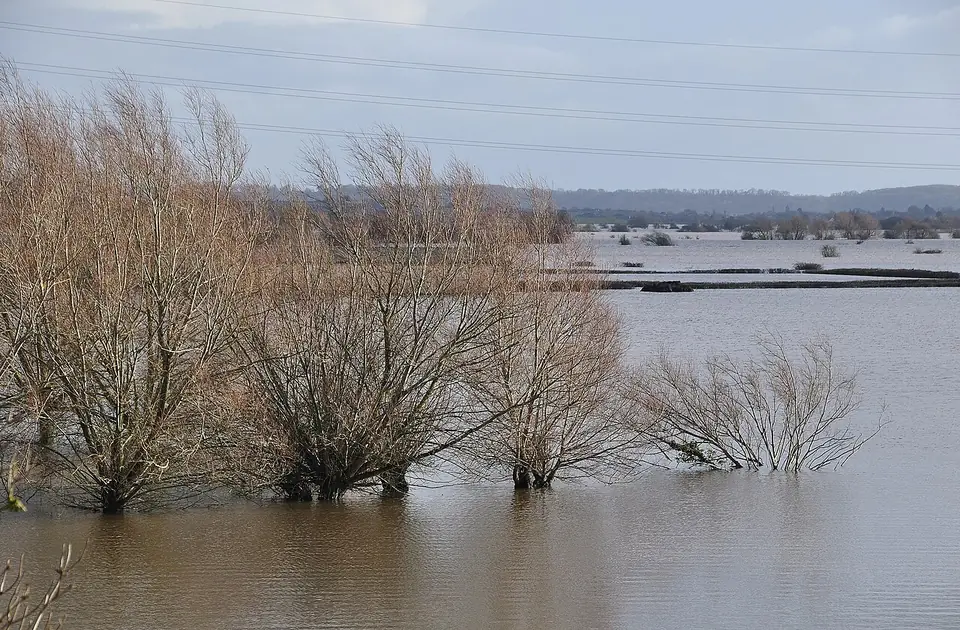
adaptationAdjustments to systems or behaviour that reduce harm from actual or expected climate change. is the other government pillar. The National Adaptation Programme and related flood-risk strategies fund and plan for river and coastal defence, planning guidance that steers some developmentImprovement in people's living conditions and opportunities, assessed through economic, social and political measures. away from the highest flood-risk land, and heat planning that is still catching up. Located examples include the Thames Barrier and the longer TE2100 plan for London, which you met in Rivers, and Environment Agency flood schemes around many other catchments. Coastal managed retreatThe planned movement of a defence inland so that selected coastal land can flood and form a new shoreline. at some English sites accepts that not every line can be held. The evaluation: the UK can afford serious engineering, yet many homes remain in flood zones, and heat adaptation in hospitals, schools and housing stock is thinner than flood engineering.
Organisations
Businesses, universities, city governments and non-governmental organisationAn organisation independent of government that works towards aims such as humanitarian relief, development or environmental protection. are the “organisations” layer. Cities such as London have their own climateThe average weather conditions and their variability in a place over a long period, usually at least 30 years. and adaptationAdjustments to systems or behaviour that reduce harm from actual or expected climate change. strategies, congestionOvercrowding of a transport network that slows movement as demand approaches or exceeds capacity. charging (partly air-quality, partly a transport-emission tool), and cycling or bus investment. Some firms buy renewableDescribes energy resources replenished by natural flows on human timescales, though their use can still cause environmental impacts. electricity, redesign products, or face investor pressure through disclosure rules. Insurers quietly shape adaptation by raising premiums in high flood-risk postcodes, which can be both a signal and a social problem. Environmental NGOs campaign for faster mitigationActions that limit climate change by reducing greenhouse gas emissions or increasing their removal. and take governments to court over missed duties — the Act makes that kind of challenge possible. Farmers’ organisations sit in a harder place: they are asked to cut emissions from livestock and fertiliser while also storing carbon in soils and coping with new weather extremes.
Individuals
Household responses include insulating homes, installing heat pumpA device that uses energy to transfer heat from air, ground or water into a building rather than generating heat by burning fuel. or solar where people can afford them, shifting to public transport, cutting flying, changing diets (less high-methane beef), and voting. Education campaigns and smart meterA device that records energy use and communicates readings to suppliers while helping consumers monitor consumption., from the energy topic, belong here. Individual action is real and also limited: tenants cannot easily upgrade a leaky rented house; people in areas with poor buses cannot “just take the train”; aviation and imported goods sit inside lifestyles that advertising still promotes. Fair answers treat individuals as one layer, not as the people who will solve a national carbon budgetA limit on the total greenhouse gas emissions permitted over a specified period to meet a climate target. alone.
Mitigation versus adaptation, and the gaps
mitigationActions that limit climate change by reducing greenhouse gas emissions or increasing their removal. cuts the gases that cause warming. adaptationAdjustments to systems or behaviour that reduce harm from actual or expected climate change. lives with the warming already built in. The UK has done more visible mitigation in the power sector than in heating, farming or aviation, and more visible adaptation against floods than against heat. fuel povertyA condition in which a household cannot afford adequate energy for essential needs such as heating. during the 2022 energy-price shock showed that mitigation policy that raises bills without insulating homes first will collide with fairness. Imported emissions mean the UK can look greener on territorial graphs than a full lifestyle account suggests. Internationally the UK argues for global climateThe average weather conditions and their variability in a place over a long period, usually at least 30 years. finance while its own historical emissions remain large — Bangladesh’s lesson will press that contrast.
Exam workshop — three scales, two types of response
Open by naming the UK. Define mitigationActions that limit climate change by reducing greenhouse gas emissions or increasing their removal. and adaptationAdjustments to systems or behaviour that reduce harm from actual or expected climate change. in a line each. Then give one government, one organisational and one individual example of each type if space allows (six mini-examples is better than twelve slogans). Evaluate with: falling territorial emissions versus leftover heat, flood and consumption issues; strong law versus uneven delivery; high capacity compared with lower-income countries, but also high responsibility.
Worked example: a graph of UK territorial CO₂ falling since 1990 beside a map of flood-risk housing and a note on the 2022 heatwave. Describe both the success and the remaining riskThe combination of the likelihood of harm and the seriousness of its consequences.. Explain coalA carbon-rich fossil fuel formed from ancient plant material, burned to produce heat or electricity. exit and the climate changeA long-term shift in average climate conditions or their variability at regional or global scales. Act for the first; TE2100 and still-incomplete heat plans for the second. Judge: responses are substantial and incomplete.
Misconception check: “the UK has already reached net zeroA balance in which remaining human-caused greenhouse gas emissions are matched by removals from the atmosphere.” is false. “Individuals recycling more is the main UK response” undersells the Act, the grid and the Barrier.
Exam craft for this page (f10, note 1). Return to the figure before you add another memorised sentence. Describe the pattern or the calculation that is actually printed, name the process this lesson taught, and only then evaluate what the evidence cannot show. A controlled paragraph of that kind is worth more than a longer paragraph that could have been written without looking at the insert. If the command word is compare, give one shared feature and one difference; if it is explain, give a because clause; if it is assess, end with a judgement that uses a criterion such as sustainability, equity or uncertainty. Practise saying the named specification terms out loud so they appear naturally under time pressure rather than as a panicked list at the end. Teachers can see the difference because your last sentence will answer the question that was asked, not a neighbouring question from revision notes.
Exam craft for this page (f10, note 2). Return to the figure before you add another memorised sentence. Describe the pattern or the calculation that is actually printed, name the process this lesson taught, and only then evaluate what the evidence cannot show. A controlled paragraph of that kind is worth more than a longer paragraph that could have been written without looking at the insert. If the command word is compare, give one shared feature and one difference; if it is explain, give a because clause; if it is assess, end with a judgement that uses a criterion such as sustainability, equity or uncertainty. Practise saying the named specification terms out loud so they appear naturally under time pressure rather than as a panicked list at the end. Teachers can see the difference because your last sentence will answer the question that was asked, not a neighbouring question from revision notes.
Exam craft for this page (f10, note 3). Return to the figure before you add another memorised sentence. Describe the pattern or the calculation that is actually printed, name the process this lesson taught, and only then evaluate what the evidence cannot show. A controlled paragraph of that kind is worth more than a longer paragraph that could have been written without looking at the insert. If the command word is compare, give one shared feature and one difference; if it is explain, give a because clause; if it is assess, end with a judgement that uses a criterion such as sustainability, equity or uncertainty. Practise saying the named specification terms out loud so they appear naturally under time pressure rather than as a panicked list at the end. Teachers can see the difference because your last sentence will answer the question that was asked, not a neighbouring question from revision notes.
Exam craft for this page (f10, note 4). Return to the figure before you add another memorised sentence. Describe the pattern or the calculation that is actually printed, name the process this lesson taught, and only then evaluate what the evidence cannot show. A controlled paragraph of that kind is worth more than a longer paragraph that could have been written without looking at the insert. If the command word is compare, give one shared feature and one difference; if it is explain, give a because clause; if it is assess, end with a judgement that uses a criterion such as sustainability, equity or uncertainty. Practise saying the named specification terms out loud so they appear naturally under time pressure rather than as a panicked list at the end. Teachers can see the difference because your last sentence will answer the question that was asked, not a neighbouring question from revision notes.
Exam craft for this page (f10, note 5). Return to the figure before you add another memorised sentence. Describe the pattern or the calculation that is actually printed, name the process this lesson taught, and only then evaluate what the evidence cannot show. A controlled paragraph of that kind is worth more than a longer paragraph that could have been written without looking at the insert. If the command word is compare, give one shared feature and one difference; if it is explain, give a because clause; if it is assess, end with a judgement that uses a criterion such as sustainability, equity or uncertainty. Practise saying the named specification terms out loud so they appear naturally under time pressure rather than as a panicked list at the end. Teachers can see the difference because your last sentence will answer the question that was asked, not a neighbouring question from revision notes.
Exam craft for this page (f10, note 6). Return to the figure before you add another memorised sentence. Describe the pattern or the calculation that is actually printed, name the process this lesson taught, and only then evaluate what the evidence cannot show. A controlled paragraph of that kind is worth more than a longer paragraph that could have been written without looking at the insert. If the command word is compare, give one shared feature and one difference; if it is explain, give a because clause; if it is assess, end with a judgement that uses a criterion such as sustainability, equity or uncertainty. Practise saying the named specification terms out loud so they appear naturally under time pressure rather than as a panicked list at the end. Teachers can see the difference because your last sentence will answer the question that was asked, not a neighbouring question from revision notes.
Exam craft for this page (f10, note 7). Return to the figure before you add another memorised sentence. Describe the pattern or the calculation that is actually printed, name the process this lesson taught, and only then evaluate what the evidence cannot show. A controlled paragraph of that kind is worth more than a longer paragraph that could have been written without looking at the insert. If the command word is compare, give one shared feature and one difference; if it is explain, give a because clause; if it is assess, end with a judgement that uses a criterion such as sustainability, equity or uncertainty. Practise saying the named specification terms out loud so they appear naturally under time pressure rather than as a panicked list at the end. Teachers can see the difference because your last sentence will answer the question that was asked, not a neighbouring question from revision notes.
Common misconceptions
Not quite: The UK’s climate response is just individuals recycling and turning off lights.
Instead: Law, carbon budgets, the electricity mix and major flood schemes are central government and organisational responses.
Not quite: Because UK territorial emissions have fallen, the job is finished.
Instead: Net zero is a 2050 target; heat, transport, farming, consumption emissions and adaptation gaps remain.
Not quite: Adaptation means giving up on cutting emissions.
Instead: The UK has to do both: more warming is already locked in, and further warming depends on mitigation now.
Exam tips
Name three scales
Every developed-country answer should mention {government, organisations and individuals}.
Label mitigation or adaptation
{Cutting gases} and {living with unavoidable change} are different marks.
Evaluate delivery, not slogans
The Climate Change Act is a strong framework; {heat, home insulation, aviation and imported emissions} show the remaining gap.