By the end of this lesson
- Describe the United Kingdom’s energy mix and how it has changed, including the decline of coal and the rise of gas, nuclear and renewables.
- Explain strategies the UK uses to manage energy resources and climate targets, and evaluate their benefits and problems.
- Link UK energy decisions to energy security, affordability and environmental goals.
Why the UK is the developed case study
The specification requires an in-depth look at energy-resource management in a developed country. This course uses the United Kingdom. The UK is a high-income, densely populated island group with a long industrialDescribes an economy with a substantial manufacturing sector as production expands beyond primary activities. history, a declining but still important North Sea oil and gas industry, an ageing nuclear fleet, almost no coalA carbon-rich fossil fuel formed from ancient plant material, burned to produce heat or electricity. left in its electricity mix, and one of the world’s largest offshore-wind industries. It has also written climateThe average weather conditions and their variability in a place over a long period, usually at least 30 years. targets into law. Those features make it a rich case: management here is not just “find more fuel”, it is a three-way argument about security, affordability and decarbonisationThe reduction of greenhouse gas emissions from activities such as electricity generation, transport and heating..
Use rounded teaching facts and be willing to update details if a paper’s insert is more recent than this page. The direction of change matters more than reciting a single year’s percentage to two decimal places.
A mix that has already been transformed
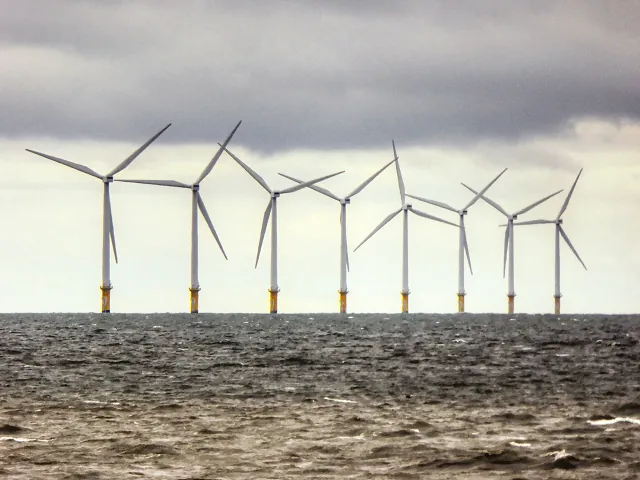
For most of the twentieth century, UK electricity was dominated by coalA carbon-rich fossil fuel formed from ancient plant material, burned to produce heat or electricity., with nuclear growing from the 1950s and 1960s and hydropowerElectricity generated by using moving or falling water to drive turbines. limited by geography. From the 1990s a “dash for gas” replaced a large amount of coal generation with combined-cycle gas plants, cutting some local air pollution and carbon per kilowatt-hour compared with older coal plant. renewableDescribes energy resources replenished by natural flows on human timescales, though their use can still cause environmental impacts. — first onshore wind, then increasingly offshore windElectricity generation using wind turbines located in the sea, where winds are often stronger and more consistent. in the North Sea and Irish Sea, plus biomassOrganic material used as fuel, including wood, crop residues and animal waste. conversions at some former coal sites and a growing amount of solar — have taken a much larger share of electricity in the twenty-first century. Coal’s retreat continued until the last UK coal-fired power station, Ratcliffe-on-Soar in Nottinghamshire, closed in September 2024, ending more than a century of coal electricity.
Oil is now mainly a transport fuel rather than an electricity fuel. natural gasA gaseous fossil fuel, mainly methane, used for heating, electricity generation and industrial processes. remains central for heating millions of homes as well as for flexible electricity. Nuclear stations such as Sizewell B continue to generate low-carbon power, but several older plants have closed or are approaching the end of their lives, so nuclear’s share has been under pressure even as new plants are planned. Hinkley Point C in Somerset is a large new European Pressurised Reactor project under construction by EDF and partners; Sizewell C in Suffolk has been taken forward as a follow-on design. Both are expensive and slow, which is part of the evaluation.
North Sea oil and gas, produced since the 1970s, turned the UK into a significant producer and, for a time, a net exporter. Output is now well below its late-1990s peak and the UK is a net importer of both oil and gas in energy-balance terms, even while production continues. That shift is a core security fact: domestic geologyThe rocks and geological structures of an area that influence its landscape and drainage. no longer cushions the country the way it once did.
Strategies: law, markets, new supply and less demand
The Climate Change Act 2008 created a legal framework of carbon budgetA limit on the total greenhouse gas emissions permitted over a specified period to meet a climate target. and an independent Climate Change Committee to advise Parliament. The UK later adopted a net zero by 2050 target for greenhouse-gas emissions. Those laws do not themselves generate electricity; they force governments to keep publishing plans and to justify decisions against a carbon trajectory.
On the supply side, management has included contracts and auctions that give renewableDescribes energy resources replenished by natural flows on human timescales, though their use can still cause environmental impacts. developers a more predictable price (a major reason offshore wind scaled up), investment in interconnectors that allow electricity to be traded with neighbouring European countries, and the controversial question of whether to license new North Sea fields or new nuclear. Onshore wind and solar have faced planning arguments about landscape, while offshore wind has been easier to expand out of sight of most voters but needs ports, ships, cables and grid upgrades onshore.
On the demand side, the UK has rolled out smart meterA device that records energy use and communicates readings to suppliers while helping consumers monitor consumption., tightened building regulations, run insulation and boiler-upgrade schemes of varying ambition, and begun a long debate about replacing household gas boilers with heat pumpA device that uses energy to transfer heat from air, ground or water into a building rather than generating heat by burning fuel. or hydrogen — a transition that is technically and politically unfinished. Transport policy includes fuel economy standards, support for electric vehicles and charging networks, and public-transport investment that is uneven between London and many other regions. Education campaigns exist, but price is often the sharper teacher: the energy-price spike after 2021–22, worsened by disruption of Russian gas supplies to Europe, pushed household bills up sharply and put fuel povertyA condition in which a household cannot afford adequate energy for essential needs such as heating. back at the centre of politics.
Benefits
The UK’s changing mix has cut carbon emissions from electricity generation dramatically compared with a coal-dominated system, improved some local air quality, and created a competitive offshore-wind industry with jobs in construction, maintenance and coastal ports. Legal carbon budgetA limit on the total greenhouse gas emissions permitted over a specified period to meet a climate target. give investors and civil servants a long signal that coalA carbon-rich fossil fuel formed from ancient plant material, burned to produce heat or electricity. electricity is not coming back. Interconnectors and a diverse (if imperfect) mix reduce the riskThe combination of the likelihood of harm and the seriousness of its consequences. that a single failed technology blackouts the island. Energy efficiency, where it has been delivered, cuts bills as well as emissions.
For a developed country with high historical emissions, these are not small gains. A student writing only “the UK uses wind now” undersells the management story: markets, law, grid engineering and the closure of coal plant all had to be arranged.
Problems and an evaluation
Problems are just as examinable. Electricity can be decarbonising while heat and transport remain stubbornly fossil-fuelled. New nuclear is over-budget and behind original schedules, a pattern familiar from large construction anywhere. Offshore wind is variable; still evenings in midwinter still need gas, interconnectors, storage or demand response. Grid capacity in some regions has lagged behind the number of renewableDescribes energy resources replenished by natural flows on human timescales, though their use can still cause environmental impacts. projects wanting to connect. Households in leaky homes, especially those off the gas grid or on prepayment meters, can be left in fuel povertyA condition in which a household cannot afford adequate energy for essential needs such as heating. even as national carbon statistics improve. Import dependence on gas exposes bills to world prices. Arguments over new oil and gas licences pit short-term security and jobs against climateThe average weather conditions and their variability in a place over a long period, usually at least 30 years. consistency.
Fracking for shale gas was explored, notably test activity in Lancashire, then restricted after small seismic events and strong local opposition; it is not a functioning pillar of UK supply. That episode is useful: not every technically available resource is socially available.
Exam tip: evaluate against three criteria — {energy security, affordability, environmental impact} — and give one piece of located evidence for each, such as North Sea decline, the 2022 price shock, Ratcliffe’s closure, Hornsea or other named offshore-wind zones, or Hinkley Point C.
Exam workshop — writing the UK case
Open by naming the country and the management challenge (keep the lights on, keep bills tolerable, meet legally binding carbon targets). Describe the changing mix with at least three sources and one direction of change (coalA carbon-rich fossil fuel formed from ancient plant material, burned to produce heat or electricity. down, offshore wind up, gas still the flexible backbone, nuclear awaiting replacement). Explain two strategies in some depth rather than listing eight slogans. Then evaluate: the electricity system has been transformed more successfully than heat and transport; legal targets are a benefit; cost, delays, imports and inequality of bills are problems.
Worked example: a graph shows UK coal electricity falling towards zero and wind rising through the 2010s and early 2020s, while gas remains substantial. Describe the crossing lines. Explain auctions, the climate changeA long-term shift in average climate conditions or their variability at regional or global scales. Act, and the dash-for-gas inheritance. Evaluate: carbon from power stations fell, but gas dependence means security and price riskThe combination of the likelihood of harm and the seriousness of its consequences. remain. That paragraph structure travels well to any insert the examiners provide.
Misconception check: “the UK has no fossil fuels left” is false — production continues, and gas still heats homes. “The UK is already net zeroA balance in which remaining human-caused greenhouse gas emissions are matched by removals from the atmosphere.” is also false; 2050 is a target, not a description of today.
Exam application (e10-1). When an unfamiliar figure appears, start by describing the pattern or the calculation the paper actually printed, then attach one idea from this lesson rather than retelling the whole topic. A precise six-mark paragraph usually needs a named factor or theory, a located or numerical detail, and a short evaluation clause about what the evidence cannot show. Practise writing that sequence under time pressure so that it becomes automatic in the exam hall. If two interpretations are possible, say which one the figure supports more strongly and why the other remains possible. That habit keeps your geography honest and earns the evaluation marks that shorter scripts miss. Teachers will recognise the difference immediately because your sentences will point at the data instead of hovering above it. Finally, check that you have answered the command word: describe, explain, compare or evaluate each demand a different last sentence.
Exam application (e10-2). When an unfamiliar figure appears, start by describing the pattern or the calculation the paper actually printed, then attach one idea from this lesson rather than retelling the whole topic. A precise six-mark paragraph usually needs a named factor or theory, a located or numerical detail, and a short evaluation clause about what the evidence cannot show. Practise writing that sequence under time pressure so that it becomes automatic in the exam hall. If two interpretations are possible, say which one the figure supports more strongly and why the other remains possible. That habit keeps your geography honest and earns the evaluation marks that shorter scripts miss. Teachers will recognise the difference immediately because your sentences will point at the data instead of hovering above it. Finally, check that you have answered the command word: describe, explain, compare or evaluate each demand a different last sentence.
Exam application (e10-3). When an unfamiliar figure appears, start by describing the pattern or the calculation the paper actually printed, then attach one idea from this lesson rather than retelling the whole topic. A precise six-mark paragraph usually needs a named factor or theory, a located or numerical detail, and a short evaluation clause about what the evidence cannot show. Practise writing that sequence under time pressure so that it becomes automatic in the exam hall. If two interpretations are possible, say which one the figure supports more strongly and why the other remains possible. That habit keeps your geography honest and earns the evaluation marks that shorter scripts miss. Teachers will recognise the difference immediately because your sentences will point at the data instead of hovering above it. Finally, check that you have answered the command word: describe, explain, compare or evaluate each demand a different last sentence.
Exam application (e10-4). When an unfamiliar figure appears, start by describing the pattern or the calculation the paper actually printed, then attach one idea from this lesson rather than retelling the whole topic. A precise six-mark paragraph usually needs a named factor or theory, a located or numerical detail, and a short evaluation clause about what the evidence cannot show. Practise writing that sequence under time pressure so that it becomes automatic in the exam hall. If two interpretations are possible, say which one the figure supports more strongly and why the other remains possible. That habit keeps your geography honest and earns the evaluation marks that shorter scripts miss. Teachers will recognise the difference immediately because your sentences will point at the data instead of hovering above it. Finally, check that you have answered the command word: describe, explain, compare or evaluate each demand a different last sentence.
Exam application (e10-5). When an unfamiliar figure appears, start by describing the pattern or the calculation the paper actually printed, then attach one idea from this lesson rather than retelling the whole topic. A precise six-mark paragraph usually needs a named factor or theory, a located or numerical detail, and a short evaluation clause about what the evidence cannot show. Practise writing that sequence under time pressure so that it becomes automatic in the exam hall. If two interpretations are possible, say which one the figure supports more strongly and why the other remains possible. That habit keeps your geography honest and earns the evaluation marks that shorter scripts miss. Teachers will recognise the difference immediately because your sentences will point at the data instead of hovering above it. Finally, check that you have answered the command word: describe, explain, compare or evaluate each demand a different last sentence.
Common misconceptions
Not quite: The UK no longer uses fossil fuels.
Instead: Gas remains central for heating and flexible electricity, and oil still dominates most road transport.
Not quite: Closing coal automatically made household bills low.
Instead: Bills depend on gas prices, network costs, policy levies and how efficient homes are, not only on whether coal stations still run.
Not quite: Net zero 2050 describes the UK’s current energy system.
Instead: It is a legal target. Management today is about the path, which is incomplete.
Exam tips
Name strategies, not only sources
Laws, auctions, interconnectors, nuclear construction and insulation schemes are {management}. A list of fuels is only the background.
Evaluate with three tests
Judge UK decisions against {security, affordability and the environment}, and admit tensions between them.
Keep heat and transport in the story
The electricity mix has changed faster than {home heating and road fuel}. That contrast is high-value evaluation.