By the end of this lesson
- Describe India’s energy demand and mix, including the continuing role of coal and the rapid growth of renewables, especially solar.
- Explain how India has tried to widen access, keep energy affordable and add cleaner capacity, and evaluate the benefits and problems.
- Compare India’s management priorities with those of the United Kingdom without copying the UK story onto a different development context.
Why India is the emerging case study
The specification requires energy-resource management in a developing or emerging country. This course uses India, paired with the UK so that you can write a genuine contrast rather than two disconnected posters. India has more than 1.4 billion people, a rapidly growing economy, world-scale cities and a large rural population. Its total energy demand is among the highest on Earth and still rising, yet energy use *per person* remains far below that of the United Kingdom, the United States or the Gulf states. Management therefore starts from a different sentence: millions of households have only recently gained a reliable electricity connection, and industrialising at scale still requires huge amounts of heat and power.
India is not “too poor to have an energy policy”. It is a major producer of coalA carbon-rich fossil fuel formed from ancient plant material, burned to produce heat or electricity. and electricity, a leader in some renewable-energy institutions, and a country whose choices measurably affect global carbon emissions. Write it as an emerging power with internal inequality, not as a charity case.
Demand, coal and a widening mix
Demand is being pushed by all three factors from lesson 4.3a: population (still growing, though more slowly than in the late twentieth century), increased wealth for a rising urban middle class and for industry, and technology (appliances, air-conditioning, telecoms, metro systems, data centres). Hot seasons add cooling load in cities. The government’s long-standing political promise is to keep power affordable enough that industrialisation and household access can continue.
coalA carbon-rich fossil fuel formed from ancient plant material, burned to produce heat or electricity. remains the backbone of electricity generation — typically around seven-tenths of generation in recent years, though the exact share moves with monsoonA seasonal reversal of prevailing winds that produces marked wet and dry seasons in many tropical regions. hydro and new renewableDescribes energy resources replenished by natural flows on human timescales, though their use can still cause environmental impacts. capacity. India has large domestic coal reserves, especially in eastern states such as Jharkhand, Chhattisgarh, Odisha and parts of West Bengal, which is a security advantage compared with its much greater dependence on imported oil. Disadvantages are just as large: open-cast mines and coal-plant clusters contribute to some of the world’s most serious urban and regional air-pollution problems; carbon emissions rise as generation grows; and high-ash domestic coal plus some imported higher-grade coal complicate plant operation.
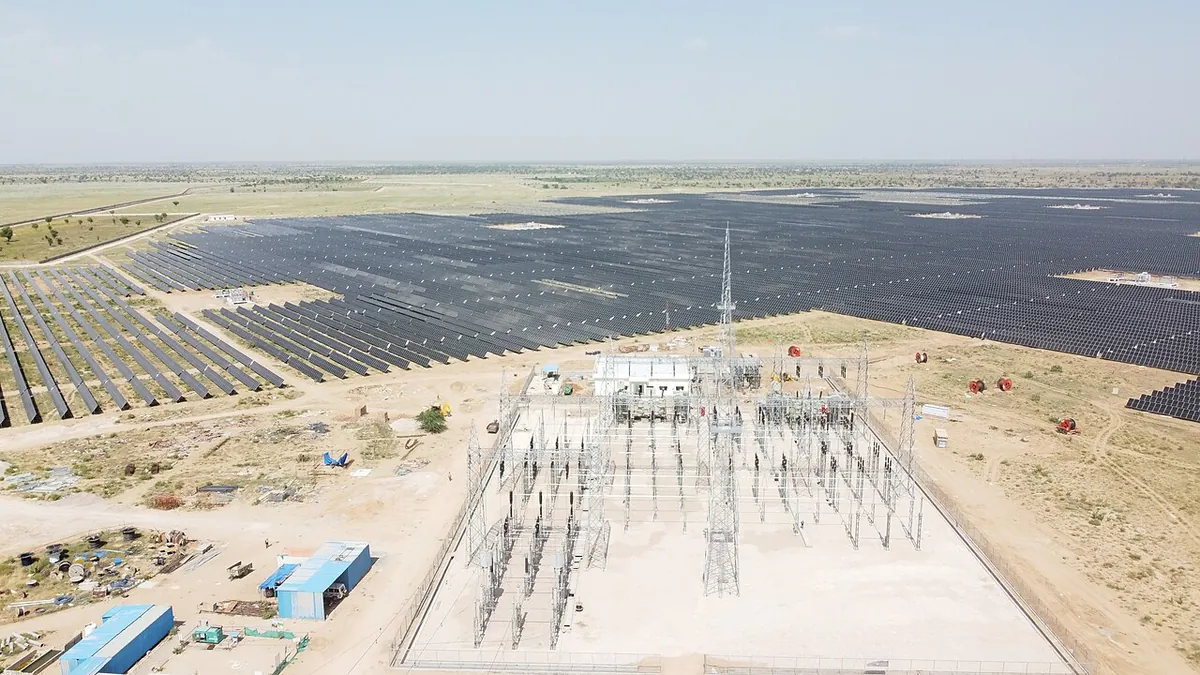
Renewables are no longer a footnote. India has added large amounts of solar capacity, including utility-scale parks in dry, sunny states such as Rajasthan (Bhadla has been widely reported as among the world’s largest solar parks) and Gujarat, plus growing rooftop solar. It helped to launch the International Solar Alliance, with its secretariat in India, as a diplomatic as well as an energy project. Wind capacity is significant in states such as Tamil Nadu and Gujarat. hydropowerElectricity generated by using moving or falling water to drive turbines., including in Himalayan rivers, adds low-carbon electricity but is seasonal and socially contested when large damA barrier across a river that holds back water and regulates downstream flow. are proposed. Nuclear provides a modest share. Traditional biomassOrganic material used as fuel, including wood, crop residues and animal waste. — fuelwoodWood collected or harvested for burning to provide heat or energy., agricultural residues, dung — still matters for cooking in some rural households, even as LPG cylinder programmes have reduced that dependence for many families.
Strategies for access, affordability and cleaner supply
A flagship access policy was household electrification. The Pradhan Mantri Sahaj Bijli Har Ghar Yojana (Saubhagya) scheme, launched in 2017, aimed to connect remaining unelectrified households. Official figures reported very high connection rates by the end of the decade; independent observers have noted that a connection is not the same as round-the-clock, high-quality supply, especially in some rural feeders. That distinction is high-value evaluation: management can succeed at access and still struggle at reliabilityThe consistency of results when measurements or an investigation are repeated under comparable conditions..
On cleaner cooking energy, the Pradhan Mantri Ujjwala Yojana has subsidised LPG connections for poorer households, cutting indoor smoke from traditional biomassOrganic material used as fuel, including wood, crop residues and animal waste. for many kitchens. Again, whether families continue to refill cylinders depends on price and income, so a connection figure can overstate permanent fuel-switching.
On supply, India has used competitive auctions to bring down solar and wind prices, built large solar parks with dedicated land and grid arrangements, expanded coal-plant and rail-for-coal infrastructureThe basic networks and facilities, such as roads, water supply and electricity, that support an economy and daily life. at the same time, and set successive national targets for non-fossil electricity capacity. The coexistence of a coalA carbon-rich fossil fuel formed from ancient plant material, burned to produce heat or electricity. expansion story and a solar success story is not a contradiction you should try to iron out; it is the management reality of an emerging economy meeting rising demand. Energy efficiency missions (standards for appliances, industrialDescribes an economy with a substantial manufacturing sector as production expands beyond primary activities. efficiencyThe proportion of an energy input converted into the intended useful output, improved by reducing energy losses. programmes, LED bulb schemes such as the earlier UJALA programme) show that demand-side management is part of the toolkit, not a UK-only idea.
Benefits
Benefits include a vast increase in the number of households with an electricity connection; cheaper LED lighting and mobile charging that change study time and information access; industrialDescribes an economy with a substantial manufacturing sector as production expands beyond primary activities. power that supports manufacturing and services, including the IT sector discussed earlier in this topic; a solar industry that has created jobs and lowered the cost of new clean capacity; and reduced indoor air pollution where LPG has genuinely replaced smoky cookstoves. Using domestic coalA carbon-rich fossil fuel formed from ancient plant material, burned to produce heat or electricity. limits some import bills for electricity compared with a wholly oil-based system. For a country whose per-person emissions remain much lower than those of long-industrialised states, these developmentImprovement in people's living conditions and opportunities, assessed through economic, social and political measures. gains are a legitimate part of an evaluation, not an excuse you should ignore.
Problems and a comparison with the UK
Problems include hazardous air quality in several cities, to which coalA carbon-rich fossil fuel formed from ancient plant material, burned to produce heat or electricity. plants, vehicles, crop-residue burning and household fuels all contribute; carbon emissions that rise even as intensity per unit of gross domestic productThe total value of goods and services produced within a country's borders over a given period, usually a year. may fall; land-use and water conflicts around mines, damA barrier across a river that holds back water and regulates downstream flow. and some solar parks; grid congestionOvercrowding of a transport network that slows movement as demand approaches or exceeds capacity. and curtailment when renewableDescribes energy resources replenished by natural flows on human timescales, though their use can still cause environmental impacts. power cannot always reach demand centres; and a continuing gap between a connected household and a household that can afford, or physically receive, reliable power all day. Mining districts do not automatically receive the same quality of lifeThe overall wellbeing of people, including health, security, access to services and satisfaction with their surroundings. improvements as solar-park press releases suggest. Informal urban neighbourhoods may rely on shared or irregular connections and on diesel or petrol generators.
Compare with the UK rather than cloning it. The UK is closing a coal-electricity chapter and arguing about how to decarbonise heat in already-connected homes. India is still adding large amounts of generation of several kinds and arguing about how to connect, supply and clean a much larger, poorer, hotter country. The UK has a legally binding net-zero date and a small population; India emphasises developmentImprovement in people's living conditions and opportunities, assessed through economic, social and political measures. space, common but differentiated responsibility in climateThe average weather conditions and their variability in a place over a long period, usually at least 30 years. diplomacy, and rapidly falling renewable costs. Both face coal-region job questions, public sensitivity to energy prices, and the need to upgrade grids. Do not write that “India should do what the UK did in 2024” as if the starting points matched.
Exam workshop — writing the India case
Name India in the first sentence and state the core tension: {rising total demand and a right to developmentImprovement in people's living conditions and opportunities, assessed through economic, social and political measures., against air pollution, carbon and uneven reliabilityThe consistency of results when measurements or an investigation are repeated under comparable conditions.}. Describe the mix: coalA carbon-rich fossil fuel formed from ancient plant material, burned to produce heat or electricity. still dominant in electricity, solar and wind rising fast, hydro and nuclear present, household cooking in transition away from traditional biomassOrganic material used as fuel, including wood, crop residues and animal waste.. Explain at least two strategies in depth (rural electrification and solar auctions, or Ujjwala and industrialDescribes an economy with a substantial manufacturing sector as production expands beyond primary activities. efficiency). Evaluate with benefits for access and cost of new solar, and problems of air quality, coal lock-in and quality of supply.
Worked example: a table shows India’s electricity generation growing strongly, coal still the largest slice, solar’s slice rising from a very small base, and nearly universal official household electrification. Describe the growing pie, not only the changing percentages. Explain population, wealth and industrialisation as demand drivers, domestic coal as a security choice, and auctions plus sunny western states as the solar story. Evaluate using the connection-versus-reliability point and a comparison sentence with the UK’s post-coal electricity system.
Misconception check: “India does not use renewable energy” is years out of date. “India has solved energy povertyA condition in which people lack sufficient income or resources to meet basic needs or participate fully in society. because connections are near universal” over-claims what a connection guarantees. “Most Indians work in IT so they use energy like Europeans” confuses a visible urban sector with national per-person demand.
Exam application (e11-1). When an unfamiliar figure appears, start by describing the pattern or the calculation the paper actually printed, then attach one idea from this lesson rather than retelling the whole topic. A precise six-mark paragraph usually needs a named factor or theory, a located or numerical detail, and a short evaluation clause about what the evidence cannot show. Practise writing that sequence under time pressure so that it becomes automatic in the exam hall. If two interpretations are possible, say which one the figure supports more strongly and why the other remains possible. That habit keeps your geography honest and earns the evaluation marks that shorter scripts miss. Teachers will recognise the difference immediately because your sentences will point at the data instead of hovering above it. Finally, check that you have answered the command word: describe, explain, compare or evaluate each demand a different last sentence.
Exam application (e11-2). When an unfamiliar figure appears, start by describing the pattern or the calculation the paper actually printed, then attach one idea from this lesson rather than retelling the whole topic. A precise six-mark paragraph usually needs a named factor or theory, a located or numerical detail, and a short evaluation clause about what the evidence cannot show. Practise writing that sequence under time pressure so that it becomes automatic in the exam hall. If two interpretations are possible, say which one the figure supports more strongly and why the other remains possible. That habit keeps your geography honest and earns the evaluation marks that shorter scripts miss. Teachers will recognise the difference immediately because your sentences will point at the data instead of hovering above it. Finally, check that you have answered the command word: describe, explain, compare or evaluate each demand a different last sentence.
Exam application (e11-3). When an unfamiliar figure appears, start by describing the pattern or the calculation the paper actually printed, then attach one idea from this lesson rather than retelling the whole topic. A precise six-mark paragraph usually needs a named factor or theory, a located or numerical detail, and a short evaluation clause about what the evidence cannot show. Practise writing that sequence under time pressure so that it becomes automatic in the exam hall. If two interpretations are possible, say which one the figure supports more strongly and why the other remains possible. That habit keeps your geography honest and earns the evaluation marks that shorter scripts miss. Teachers will recognise the difference immediately because your sentences will point at the data instead of hovering above it. Finally, check that you have answered the command word: describe, explain, compare or evaluate each demand a different last sentence.
Exam application (e11-4). When an unfamiliar figure appears, start by describing the pattern or the calculation the paper actually printed, then attach one idea from this lesson rather than retelling the whole topic. A precise six-mark paragraph usually needs a named factor or theory, a located or numerical detail, and a short evaluation clause about what the evidence cannot show. Practise writing that sequence under time pressure so that it becomes automatic in the exam hall. If two interpretations are possible, say which one the figure supports more strongly and why the other remains possible. That habit keeps your geography honest and earns the evaluation marks that shorter scripts miss. Teachers will recognise the difference immediately because your sentences will point at the data instead of hovering above it. Finally, check that you have answered the command word: describe, explain, compare or evaluate each demand a different last sentence.
Common misconceptions
Not quite: India is too poor to have a serious renewable-energy programme.
Instead: It is one of the world’s large solar markets and a founder of the International Solar Alliance.
Not quite: Near-universal household electrification means energy poverty is over.
Instead: Reliability, voltage quality, affordability and clean cooking fuels can still lag behind the arrival of a wire.
Not quite: The UK and India should be judged against identical next steps.
Instead: One is greening an already-universal, high-consumption system; the other is expanding a still-growing system at a far lower per-person baseline.
Exam tips
Start from demand
India’s first management fact is {large and rising total demand with still-low use per person}, not a copy of the UK’s coal-closure story.
Treat coal and solar as a pair
Both are true at once: {coal still generates the largest share} and {solar capacity has grown very quickly}.
Separate connection from supply quality
A household can be {electrified on paper} and still face outages or unaffordable refills of LPG.