By the end of this lesson
- Describe how climate change affects fragile environments through sea level, hazards and ecosystem change.
- Explain impacts on employment, settlement, health and food supply, using located examples such as low-lying coasts and drylands.
- Interpret line graphs and bar charts of temperature and sea-level change.
What the specification wants you to cover
The impacts list is long on purpose: rising sea levels, more hazards, ecosystem changes, reduced employment opportunities, changing settlement patterns, and health and wellbeing challenges, including food supply. An 8-mark answer cannot treat each in equal depth. Pick the ones the figure supports and make sure you include at least one physical-environment impact and one people impact. This lesson is about *negative* effects; responses come in 7.3. Do not spend half the essay on wind farms here.
Skill (5) asks you to {use and interpret line graphA graph joining plotted values to show change along a continuous scale, often time. or bar charts showing climate changeA long-term shift in average climate conditions or their variability at regional or global scales. and sea-level change}. Global mean sea level rose on the order of 15–20 cm during the twentieth century and the rate has increased, with satellite-era rise around 3–4 mm per year in recent decades (use the insert’s numbers if they differ). The graph should show both the rise and any acceleration. Temperature graphs should show the long-term rise with year-to-year wiggles — those wiggles are not a refutation.
Rising seas, hazards and ecosystems
Rising sea levels come from thermal expansion of warming ocean water and from added water as glaciers and ice sheets melt. Impacts are worst where land is already low, sinking (some deltas), or short of sediment because of upstream damA barrier across a river that holds back water and regulates downstream flow.. Saltwater contaminates aquifers and rice fields, as in parts of coastal Bangladesh; storm surgeA temporary rise in sea level caused by strong winds and low atmospheric pressure during a storm. rides in on a higher baseline, a lesson already used for the Maldives and for cyclone coasts; some small-island beachAn accumulation of sand, shingle or other sediment along the shore between the land and the sea. and infrastructureThe basic networks and facilities, such as roads, water supply and electricity, that support an economy and daily life. retreat. People may raise houses, build walls, or eventually move — which is already a settlement-pattern impact.
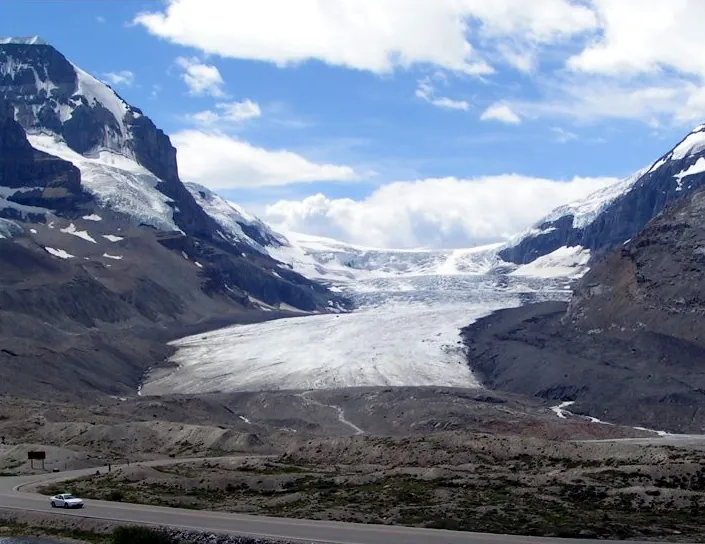
More hazards does not mean every storm is “caused by climate changeA long-term shift in average climate conditions or their variability at regional or global scales.”. It means a warmer atmosphere and ocean change the odds: more intense rainfall bursts and heatwaves are among the clearer signals; some regions face worse droughtA prolonged period of unusually low precipitation that creates water deficits for ecosystems and people.; tropical cycloneAn intense rotating low-pressure storm developing over warm tropical oceans, with strong winds and heavy rain. can carry more moisture and higher surge even if their total numbers do not simply shoot up. Heat itself is a hazardA potential source of harm to people, property or the environment., especially in cities and for outdoor workers. Wildfire weather has worsened in several forest and shrubland regions.
Ecosystem changes include coral bleaching when marine heatwaves push reefs past their thermal limit; poleward or upslope shifts of species that can move, and local loss of those that cannot; earlier springs; and thawing permafrostGround that remains at or below freezing for at least two consecutive years. that undermines tundraA cold, treeless biome with a short growing season and often permanently frozen subsoil. landscapes and can release extra carbon — a feedback. Rainforests under heat and drought stress become more flammable, linking this lesson back to deforestationThe clearance of forest so that land is converted to another use. impacts.
Jobs, settlements, health and food
Employment falls or shifts where fisheries follow changing stocks, where ski seasons shorten, where heat cuts outdoor working hours, where droughtA prolonged period of unusually low precipitation that creates water deficits for ecosystems and people. kills livestock, or where bleached reefs lose tourist appeal (the Great Barrier Reef and other reef economies). Some new jobs appear in adaptationAdjustments to systems or behaviour that reduce harm from actual or expected climate change. and low-carbon industries; the spec asks for negative effects here, but a one-line acknowledgement of new work is fair evaluation if the question says “assess”.
Settlement patterns change when coasts erode, when deltas flood too often, when mountain water supplies shift, or when dryland villages empty. Movement is usually first local — to higher ground, to a nearby town — rather than a cinematic international wave. Money, borders and attachments stop many people moving at all, which can leave the poorest stuck in harm’s way.
Health and wellbeing include heat stress and death, the spread or shifting seasonalityRegular variation in demand, employment or activity through the year, often linked to climate or holidays. of some vector-borne diseases, mental strain after repeated disasterA serious disruption causing losses beyond an affected community's ability to cope using its own resources., and injuries from floods and fires. Food supply is affected when droughts, floods, heat and pests hit yields, when fisheries move, and when saltwater spoils delta rice. Global markets can import calories into a rich city while a nearby rural poor household goes hungry — another entitlement point.
Fragile environments feel these first
coral reefA marine ecosystem built from the calcium carbonate skeletons of reef-forming corals, usually in warm, shallow tropical seas., high mountains with thin ice, low atolls, permafrostGround that remains at or below freezing for at least two consecutive years. coasts and dryland margins are the teaching examples of places already near thresholdA critical level of pressure beyond which an environmental system changes substantially, sometimes irreversibly.. The Amazon’s south-eastern fringe becoming more seasonal is a rainforest example. The Sahel’s rainfall remaining unreliable is a dryland example. You can locate one or two and then generalise, rather than listing every biomeA large ecological region characterised by its climate and dominant vegetation, with associated animal communities..
Worked example: a line graphA graph joining plotted values to show change along a continuous scale, often time. of global sea level curving upward, plus a bar chart of coral-bleaching years. Describe the acceleration and the clustering of recent bleaching. Explain thermal expansion and ice melt for the first, marine heatwaves on an enhanced greenhouse planet for the second. Then add a people sentence: reef tourism jobs and coastal flooding of homes.
Uncertainty without shrug
Impacts are uneven and some details (exactly how much monsoonA seasonal reversal of prevailing winds that produces marked wet and dry seasons in many tropical regions. rain will change in a given district) remain uncertain. That is not a reason to write “we cannot say anything”. Directional statements that match the graphs — seas rising, heatwaves increasing, reefs bleaching more often — are robust. Local magnitude depends on future emissions (the response lessons) and on how protected or poor the people are (vulnerabilityThe susceptibility of people or assets to harm from a hazard because of their physical, social or economic conditions.).
Exam workshop — reading the climate graph first
Command words matter. “Describe” the graph’s trend, variability and any labelled anomalies. “Explain” using expansion, melt, extra heat, or ecosystemA system of organisms interacting with each other and with their non-living environment. thresholdA critical level of pressure beyond which an environmental system changes substantially, sometimes irreversibly.. “Suggest impacts on people” then needs employment, settlement, health or food, located if possible. Bangladesh’s delta (floods, cyclones, salinity) and a UK heatwave or flood year are useful contrasts you will expand in the two response lessons: the same physical hazardA potential source of harm to people, property or the environment. meets very different incomes and institutions.
Misconception check: a record cold week does not cancel a rising multi-decade graph. And “more hazards” does not require you to blame climate changeA long-term shift in average climate conditions or their variability at regional or global scales. for every individual cyclone; write about changing riskThe combination of the likelihood of harm and the seriousness of its consequences. and intensity, and about higher seas lifting every surge.
Exam craft for this page (f07, note 1). Return to the figure before you add another memorised sentence. Describe the pattern or the calculation that is actually printed, name the process this lesson taught, and only then evaluate what the evidence cannot show. A controlled paragraph of that kind is worth more than a longer paragraph that could have been written without looking at the insert. If the command word is compare, give one shared feature and one difference; if it is explain, give a because clause; if it is assess, end with a judgement that uses a criterion such as sustainability, equity or uncertainty. Practise saying the named specification terms out loud so they appear naturally under time pressure rather than as a panicked list at the end. Teachers can see the difference because your last sentence will answer the question that was asked, not a neighbouring question from revision notes.
Exam craft for this page (f07, note 2). Return to the figure before you add another memorised sentence. Describe the pattern or the calculation that is actually printed, name the process this lesson taught, and only then evaluate what the evidence cannot show. A controlled paragraph of that kind is worth more than a longer paragraph that could have been written without looking at the insert. If the command word is compare, give one shared feature and one difference; if it is explain, give a because clause; if it is assess, end with a judgement that uses a criterion such as sustainability, equity or uncertainty. Practise saying the named specification terms out loud so they appear naturally under time pressure rather than as a panicked list at the end. Teachers can see the difference because your last sentence will answer the question that was asked, not a neighbouring question from revision notes.
Exam craft for this page (f07, note 3). Return to the figure before you add another memorised sentence. Describe the pattern or the calculation that is actually printed, name the process this lesson taught, and only then evaluate what the evidence cannot show. A controlled paragraph of that kind is worth more than a longer paragraph that could have been written without looking at the insert. If the command word is compare, give one shared feature and one difference; if it is explain, give a because clause; if it is assess, end with a judgement that uses a criterion such as sustainability, equity or uncertainty. Practise saying the named specification terms out loud so they appear naturally under time pressure rather than as a panicked list at the end. Teachers can see the difference because your last sentence will answer the question that was asked, not a neighbouring question from revision notes.
Exam craft for this page (f07, note 4). Return to the figure before you add another memorised sentence. Describe the pattern or the calculation that is actually printed, name the process this lesson taught, and only then evaluate what the evidence cannot show. A controlled paragraph of that kind is worth more than a longer paragraph that could have been written without looking at the insert. If the command word is compare, give one shared feature and one difference; if it is explain, give a because clause; if it is assess, end with a judgement that uses a criterion such as sustainability, equity or uncertainty. Practise saying the named specification terms out loud so they appear naturally under time pressure rather than as a panicked list at the end. Teachers can see the difference because your last sentence will answer the question that was asked, not a neighbouring question from revision notes.
Exam craft for this page (f07, note 5). Return to the figure before you add another memorised sentence. Describe the pattern or the calculation that is actually printed, name the process this lesson taught, and only then evaluate what the evidence cannot show. A controlled paragraph of that kind is worth more than a longer paragraph that could have been written without looking at the insert. If the command word is compare, give one shared feature and one difference; if it is explain, give a because clause; if it is assess, end with a judgement that uses a criterion such as sustainability, equity or uncertainty. Practise saying the named specification terms out loud so they appear naturally under time pressure rather than as a panicked list at the end. Teachers can see the difference because your last sentence will answer the question that was asked, not a neighbouring question from revision notes.
Exam craft for this page (f07, note 6). Return to the figure before you add another memorised sentence. Describe the pattern or the calculation that is actually printed, name the process this lesson taught, and only then evaluate what the evidence cannot show. A controlled paragraph of that kind is worth more than a longer paragraph that could have been written without looking at the insert. If the command word is compare, give one shared feature and one difference; if it is explain, give a because clause; if it is assess, end with a judgement that uses a criterion such as sustainability, equity or uncertainty. Practise saying the named specification terms out loud so they appear naturally under time pressure rather than as a panicked list at the end. Teachers can see the difference because your last sentence will answer the question that was asked, not a neighbouring question from revision notes.
Exam craft for this page (f07, note 7). Return to the figure before you add another memorised sentence. Describe the pattern or the calculation that is actually printed, name the process this lesson taught, and only then evaluate what the evidence cannot show. A controlled paragraph of that kind is worth more than a longer paragraph that could have been written without looking at the insert. If the command word is compare, give one shared feature and one difference; if it is explain, give a because clause; if it is assess, end with a judgement that uses a criterion such as sustainability, equity or uncertainty. Practise saying the named specification terms out loud so they appear naturally under time pressure rather than as a panicked list at the end. Teachers can see the difference because your last sentence will answer the question that was asked, not a neighbouring question from revision notes.
Common misconceptions
Not quite: If scientists are not certain about every local rainfall change, they are not certain that the planet is warming.
Instead: The global warming and sea-level trends are clear even though some regional details remain uncertain.
Not quite: Climate change invented every flood and cyclone.
Instead: Those hazards existed already. Higher seas, more moisture and greater heat change their likelihood, intensity or consequences.
Not quite: Everyone in a risky place will migrate internationally.
Instead: Much movement is local, and many people cannot move.
Exam tips
Pick from the official list
Mention at least one of {sea level, hazards, ecosystems} and one of {jobs, settlement, health, food}, matching the figure.
Describe the graph before you explain it
Say whether sea level or temperature is {rising, accelerating or variable}, then give the process.
Locate a threshold
Reefs, drylands, tundra and low deltas make the impacts concrete.