By the end of this lesson
- Define desertification and locate the kinds of environment it affects.
- Explain how drought, population pressure, fuelwood collection, overgrazing and migration combine to cause desertification.
- Interpret line graphs that relate population growth to pressure on dryland resources.
Desertification is not “the Sahara marching south”
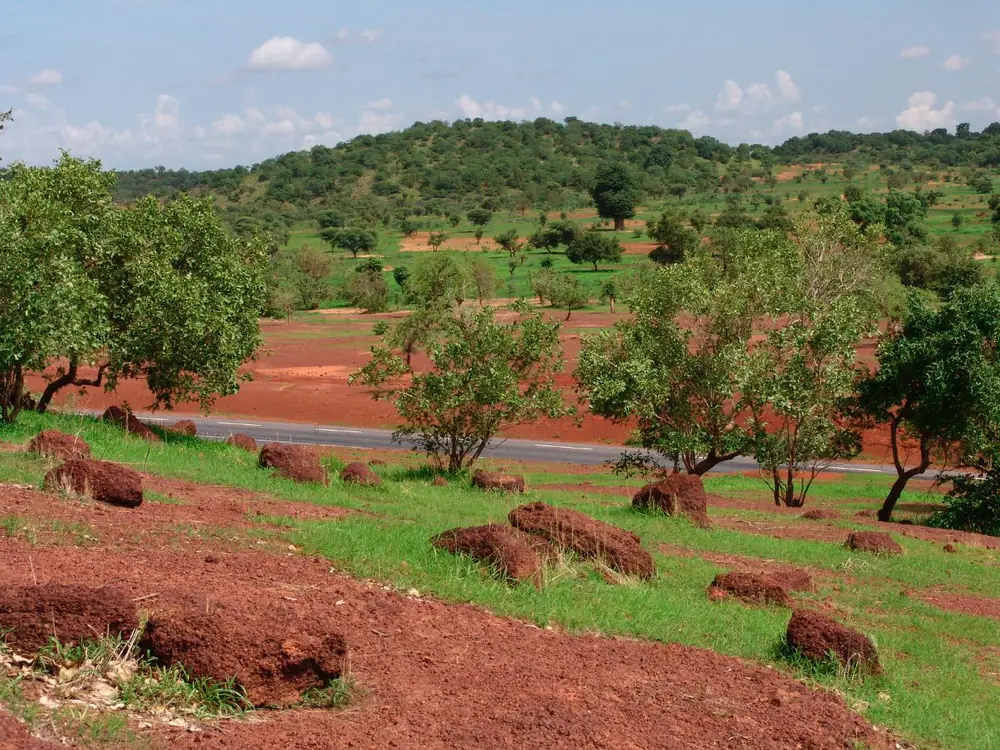
desertificationThe degradation of land in dry regions through climatic variations and human activities, reducing its biological productivity. is the persistent degradation of dryland so that it loses much of its biological productivityThe amount of output produced for each unit of input, such as output per worker.. It is not simply the physical spread of an existing sand desertA biome with very low precipitation and sparse vegetation adapted to water shortage., and it is not the same thing as a single droughtA prolonged period of unusually low precipitation that creates water deficits for ecosystems and people. year after which vegetation can bounce back. The specification lists five causes: drought, population pressureDemand from a population that strains the capacity of land, resources or services to support it., fuel supply, overgrazingThe removal of vegetation by livestock faster than it can regrow, exposing soil to erosion. and migrationThe movement of people from one place to another to live for a significant period.. Good answers treat them as a system. Drought weakens plants; more people and animals then take more from a weaker system; fuelwoodWood collected or harvested for burning to provide heat or energy. collection and grazing remove the remaining cover; degraded land and failed rains push people to move, which can transfer pressure to the next well or the next city.
The Sahel is the classic teaching region because it is a populated semi-arid belt with a history of severe drought (notably in the 1970s and 1980s) and of land-use change. Similar processes operate on other dryland margins. Name the Sahel as a located example of the *environment type*, and use a village-scale mechanism so the causes do not float as slogans.
Drought and population pressure
droughtA prolonged period of unusually low precipitation that creates water deficits for ecosystems and people. is a prolonged period of below-average rainfall. In the Sahel the wet season already depends on the northward shift of the Intertropical Convergence Zone; if that shift is weak or late, pasture and rain-fed millet or sorghum fail. Plants that are already stressed produce less seed, soils dry and crack, and the next rains run off rather than soaking in. climate changeA long-term shift in average climate conditions or their variability at regional or global scales. can make rainfall more unreliable, which links this lesson forward to 7.1c, but you should still treat drought as a physical trigger that human land useThe purpose for which land is used, such as housing, farming, industry or recreation. can either cushion or amplify.
population pressureDemand from a population that strains the capacity of land, resources or services to support it. means more people needing food, water, grazing and fuel from the same area of land. It is not a rude synonym for “too many poor people”. It describes a mismatch between numbers (and their herds and fuel needs) and what that land can sustainably yield with the technology and tenure system in use. Higher densities can, in Boserup’s sense, stimulate intensification — stone lineA row of stones placed along a slope contour to slow runoff, trap sediment and improve infiltration., zaï planting pits, more careful water harvesting — but they can also shorten fallow, push cultivation onto steeper or drier land, and increase the harvest of wood. Skill (2) asks you to {use and interpret line graphA graph joining plotted values to show change along a continuous scale, often time. showing past and predicted global population growth, and population in relation to likely resources}. On a Sahelian graph a steep population line beside a flat or falling rainfall or biomassOrganic material used as fuel, including wood, crop residues and animal waste. line is a pressure story, not automatically a famineAn extreme food shortage causing widespread hunger, malnutrition and excess deaths. prophecy.
Fuelwood and overgrazing
Many dryland households cook with wood or charcoal because other fuels are expensive or unavailable. As settlements grow, the radius of fuelwoodWood collected or harvested for burning to provide heat or energy. collection expands and the stumpThe low remnant of a coastal stack worn down by erosion and weathering. around villages disappear. Trees and shrubs in drylands do more than burn: they shelter soil, recycle nutrients and feed animals in the dry season. Removing them exposes soil to wind and rain-splash. Where charcoal is sold into towns, the pressure is no longer only local subsistenceDescribes farming mainly to feed the farmer's household rather than to sell produce.; it is a market chain.
overgrazingThe removal of vegetation by livestock faster than it can regrow, exposing soil to erosion. happens when too many animals, or animals kept too long in one place, eat plants faster than they can recover and trample soils into hard pans or loose dust. It is not caused by “goats being bad”. It is caused by herd sizes, restricted mobility (fences, borders, lost transhumance routes), and wells that pin animals in one spot so they eat out a ring of land. A boreholeA narrow drilled shaft used to reach groundwater for abstraction or monitoring. that looks like a developmentImprovement in people's living conditions and opportunities, assessed through economic, social and political measures. success can become a desertificationThe degradation of land in dry regions through climatic variations and human activities, reducing its biological productivity. machine if it concentrates herds without matching pasture management.
Worked example: a photograph shows bare ground around a well, with a little more cover further away. The geographical sentence is that water availability has fixed the animals in place, so grazing pressure is spatially concentrated. Blaming “droughtA prolonged period of unusually low precipitation that creates water deficits for ecosystems and people. alone” ignores the ring pattern the photo actually shows.
Migration as cause and consequence
migrationThe movement of people from one place to another to live for a significant period. appears twice in this topic: as a cause of desertificationThe degradation of land in dry regions through climatic variations and human activities, reducing its biological productivity. and later as an impact. People moving into a dryland frontier — perhaps displaced by droughtA prolonged period of unusually low precipitation that creates water deficits for ecosystems and people. elsewhere, or following a new road or well — can raise local population pressure quickly, before institutions for managing common grazing have adapted. Seasonal or longer-term out-migration can also change who is left to manage the land: if working-age adults leave, remaining households may struggle to maintain terraces or to move herds at the right time. In-migration to towns can increase urban demand for charcoal, which is then extracted from surrounding countryside. Write migration as a link in the chain, not as a separate moral story about people “leaving because they want to”.
A systems diagram, not five isolated bullets
Examiners reward answers that show interaction. droughtA prolonged period of unusually low precipitation that creates water deficits for ecosystems and people. reduces plant growth; the same number of animals then becomes overgrazingThe removal of vegetation by livestock faster than it can regrow, exposing soil to erosion.; people cut more shrubs for fuel because crop residues are scarce; soils degrade; yields fall; some households migrate; the next well or the receiving town feels new pressure. You can start the chain at different points depending on the figure. A rainfall graph wants drought first. A population pyramid or a steep population line wants pressure first. A photo of charcoal mounds wants fuel supply first.
Misconception check: desertificationThe degradation of land in dry regions through climatic variations and human activities, reducing its biological productivity. is not the Sahara’s dunes sliding south like a carpet. Satellite and field evidence over recent decades have shown both degradation and recovery in different Sahelian places, including some greening where rainfall and land management improved. That is why “the desertA biome with very low precipitation and sparse vegetation adapted to water shortage. always expands” is too crude, even though serious degradation remains real.
Exam workshop — graphs, photos and the five named causes
Use the five specification words on purpose: {droughtA prolonged period of unusually low precipitation that creates water deficits for ecosystems and people., population pressure, fuel supply, overgrazingThe removal of vegetation by livestock faster than it can regrow, exposing soil to erosion., migrationThe movement of people from one place to another to live for a significant period.}. Then attach each to evidence. A line graphA graph joining plotted values to show change along a continuous scale, often time. of rainfall with multi-year dips supports drought. A line of rural population or livestock numbers supports pressure. A map of remaining woodland around a growing town supports fuel supply. A radial bare zone around a well supports overgrazing tied to water points. A flow arrow towards a city supports migration as both impact and further cause.
Worked example: 1970s–1980s Sahel rainfall sits well below a longer-term average while rural population continues to rise. Describe both lines. Explain that plants produced less at the same time as more people and animals needed them, so fuelwoodWood collected or harvested for burning to provide heat or energy. cutting and grazing could more easily strip cover. Evaluate: not every locality followed the same path, and later recovery in some areas shows that management and returning rains can reverse some damage. That balanced tone matches both the science and the mark scheme.
Exam craft for this page (f02, note 1). Return to the figure before you add another memorised sentence. Describe the pattern or the calculation that is actually printed, name the process this lesson taught, and only then evaluate what the evidence cannot show. A controlled paragraph of that kind is worth more than a longer paragraph that could have been written without looking at the insert. If the command word is compare, give one shared feature and one difference; if it is explain, give a because clause; if it is assess, end with a judgement that uses a criterion such as sustainability, equity or uncertainty. Practise saying the named specification terms out loud so they appear naturally under time pressure rather than as a panicked list at the end. Teachers can see the difference because your last sentence will answer the question that was asked, not a neighbouring question from revision notes.
Exam craft for this page (f02, note 2). Return to the figure before you add another memorised sentence. Describe the pattern or the calculation that is actually printed, name the process this lesson taught, and only then evaluate what the evidence cannot show. A controlled paragraph of that kind is worth more than a longer paragraph that could have been written without looking at the insert. If the command word is compare, give one shared feature and one difference; if it is explain, give a because clause; if it is assess, end with a judgement that uses a criterion such as sustainability, equity or uncertainty. Practise saying the named specification terms out loud so they appear naturally under time pressure rather than as a panicked list at the end. Teachers can see the difference because your last sentence will answer the question that was asked, not a neighbouring question from revision notes.
Exam craft for this page (f02, note 3). Return to the figure before you add another memorised sentence. Describe the pattern or the calculation that is actually printed, name the process this lesson taught, and only then evaluate what the evidence cannot show. A controlled paragraph of that kind is worth more than a longer paragraph that could have been written without looking at the insert. If the command word is compare, give one shared feature and one difference; if it is explain, give a because clause; if it is assess, end with a judgement that uses a criterion such as sustainability, equity or uncertainty. Practise saying the named specification terms out loud so they appear naturally under time pressure rather than as a panicked list at the end. Teachers can see the difference because your last sentence will answer the question that was asked, not a neighbouring question from revision notes.
Exam craft for this page (f02, note 4). Return to the figure before you add another memorised sentence. Describe the pattern or the calculation that is actually printed, name the process this lesson taught, and only then evaluate what the evidence cannot show. A controlled paragraph of that kind is worth more than a longer paragraph that could have been written without looking at the insert. If the command word is compare, give one shared feature and one difference; if it is explain, give a because clause; if it is assess, end with a judgement that uses a criterion such as sustainability, equity or uncertainty. Practise saying the named specification terms out loud so they appear naturally under time pressure rather than as a panicked list at the end. Teachers can see the difference because your last sentence will answer the question that was asked, not a neighbouring question from revision notes.
Exam craft for this page (f02, note 5). Return to the figure before you add another memorised sentence. Describe the pattern or the calculation that is actually printed, name the process this lesson taught, and only then evaluate what the evidence cannot show. A controlled paragraph of that kind is worth more than a longer paragraph that could have been written without looking at the insert. If the command word is compare, give one shared feature and one difference; if it is explain, give a because clause; if it is assess, end with a judgement that uses a criterion such as sustainability, equity or uncertainty. Practise saying the named specification terms out loud so they appear naturally under time pressure rather than as a panicked list at the end. Teachers can see the difference because your last sentence will answer the question that was asked, not a neighbouring question from revision notes.
Exam craft for this page (f02, note 6). Return to the figure before you add another memorised sentence. Describe the pattern or the calculation that is actually printed, name the process this lesson taught, and only then evaluate what the evidence cannot show. A controlled paragraph of that kind is worth more than a longer paragraph that could have been written without looking at the insert. If the command word is compare, give one shared feature and one difference; if it is explain, give a because clause; if it is assess, end with a judgement that uses a criterion such as sustainability, equity or uncertainty. Practise saying the named specification terms out loud so they appear naturally under time pressure rather than as a panicked list at the end. Teachers can see the difference because your last sentence will answer the question that was asked, not a neighbouring question from revision notes.
Common misconceptions
Not quite: Desertification means sand dunes from the Sahara sliding south.
Instead: It means dryland losing productivity. Dunes can be involved, but the process is about vegetation, soils, climate and land use.
Not quite: More people always desertify the land.
Instead: Population pressure can degrade land or stimulate careful intensification, depending on technology, tenure and rainfall.
Not quite: A new well always prevents desertification.
Instead: Extra water can save lives and animals, but if it pins herds in one place it can strip the surrounding pasture.
Exam tips
Use all five named causes
The spec lists {drought, population pressure, fuel supply, overgrazing and migration}. Mention the ones the figure supports and show how they connect.
Desertification is lasting degradation
A single dry year is {drought}. Desertification is a longer loss of the land’s biological productivity.
Read spatial clues
A bare ring around a well is evidence of {concentrated grazing}, not proof that rain has vanished everywhere.