By the end of this lesson
- Define arable, pastoral, commercial, subsistence, intensive and extensive farming and combine those labels correctly.
- Explain how different farming systems modify soils, water, biodiversity and rural employment.
- Draw and interpret a flow diagram of those effects.
Three pairs of labels
Farming systems are classified in pairs that can be combined. arableDescribes farming that grows crops rather than rearing livestock. grows crops; pastoralDescribes farming that rears livestock for products such as meat, milk or wool. raises animals; mixed farms do both. commercialDescribes farming whose main purpose is to produce goods for sale. farms produce mainly for sale; subsistenceDescribes farming mainly to feed the farmer's household rather than to sell produce. farms produce mainly for the household, though many sell a surplus. intensiveDescribes farming with high inputs of labour or capital per unit area of land. systems have high inputs (labour, machinery, fertiliser, feed) per hectare and usually high outputs per hectare; extensiveDescribes farming with relatively low inputs of labour or capital per unit area of land. systems use fewer inputs per hectare and need more land for the same output. A commercial arable prairie grain farm can be extensive (huge fields, relatively few workers). A commercial Dutch greenhouse or a Kenyan irrigated horticulture plot can be intensive. A highland pastoral system may be extensive and partly subsistence. Do not treat “intensive” as a synonym for “commercial” or “bad”.
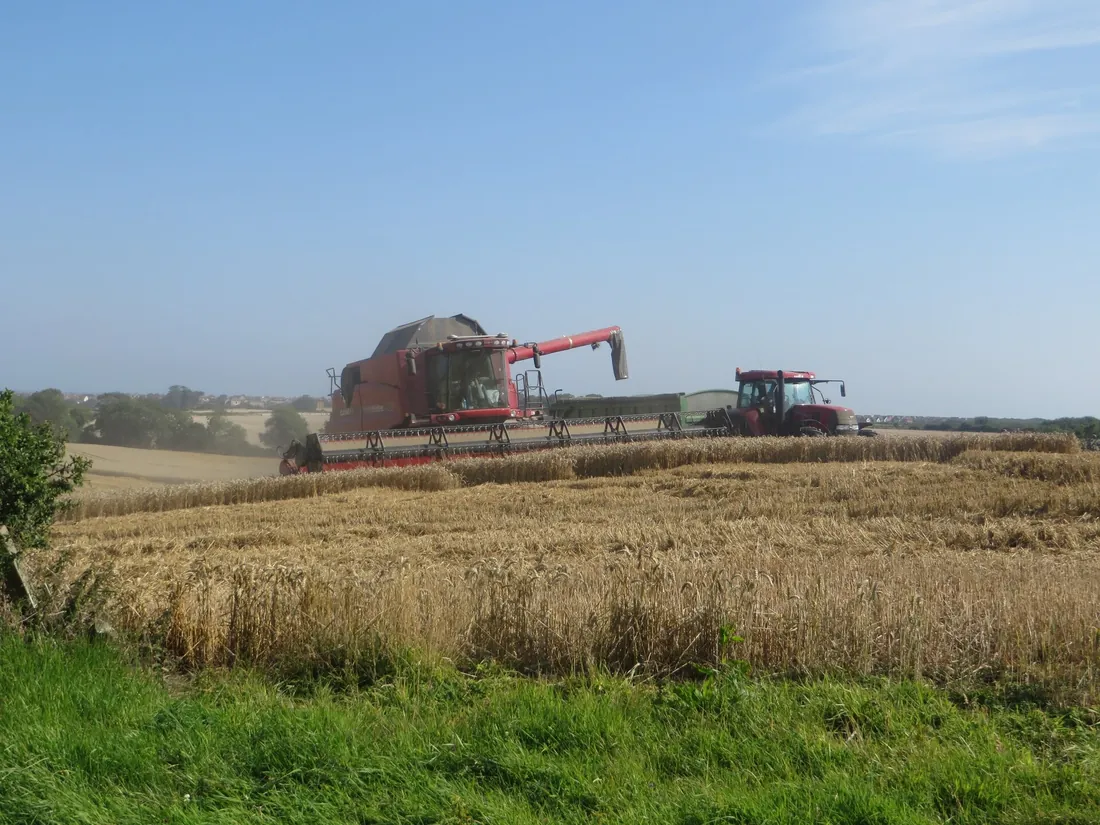
Exam tip: give {two labels} for any named farm in a photo — for example {commercial, pastoral, extensive} — and say what you can actually see that supports each label.
How farms modify ecosystems
Clearance, ploughing, irrigation, drainage, fertiliser, pesticide, fencing and the choice of a few species all simplify the original biomeA large ecological region characterised by its climate and dominant vegetation, with associated animal communities.. intensiveDescribes farming with high inputs of labour or capital per unit area of land. arableDescribes farming that grows crops rather than rearing livestock. systems can raise yields dramatically (a Boserupian step) and also cause nutrient runoff, compacted soils, hedgerow loss and lower biodiversityThe variety of living organisms, including differences within species, between species and among ecosystems.. Intensive pastoralDescribes farming that rears livestock for products such as meat, milk or wool. systems, such as feedlots or heavily stocked dairy, concentrate manure and imported feed. extensiveDescribes farming with relatively low inputs of labour or capital per unit area of land. ranching can look “natural” and still cause deforestationThe clearance of forest so that land is converted to another use. or overgrazingThe removal of vegetation by livestock faster than it can regrow, exposing soil to erosion. if the land area is huge and poorly managed. subsistenceDescribes farming mainly to feed the farmer's household rather than to sell produce. shifting cultivation at low density with long fallows may allow forest recovery; at high density with short fallows it becomes a deforestation driver.
Water is a common thread: irrigation can green a dryland and salinise it; upland drainage can speed runoff into flood-prone towns; rice paddies emit methaneA powerful greenhouse gas released by sources including livestock, rice cultivation, waste and fossil fuel extraction., linking farm modification to the enhanced greenhouse effectAdditional warming caused by human activities increasing atmospheric greenhouse gas concentrations..
People and rural change
The system also changes rural society. Mechanised commercialDescribes farming whose main purpose is to produce goods for sale. farms employ few people per tonne of food, which is a major reason farm employment has fallen in the UK. Labour-intensive subsistenceDescribes farming mainly to feed the farmer's household rather than to sell produce. or smallholder commercial plots, common in rural Kenya, occupy many people per hectare but may yield less surplus and leave households exposed to droughtA prolonged period of unusually low precipitation that creates water deficits for ecosystems and people.. When a region shifts from mixed small farms towards larger commercial units, landscapes, jobs and village services change together — the theme of the next section of this topic.
Flow diagrams
Skill (2) asks you to {use flow diagrams to represent the effects of different human activities on ecosystemA system of organisms interacting with each other and with their non-living environment. and rural environments}. Boxes name storeA part of a system in which water or other material is held for a period of time. or groups (soil, river, household income, wildlife); arrows name processes (ploughing, fertiliser runoff, cash from milk, loss of hedge birds). A good diagram has a direction and can branch: an intensiveDescribes farming with high inputs of labour or capital per unit area of land. arableDescribes farming that grows crops rather than rearing livestock. system can increase yield *and* increase nitrate in a river *and* reduce on-farm employment. Keep boxes short; the examiner wants the links, not artwork.
Choosing a system to match the place
There is no universally correct system. extensiveDescribes farming with relatively low inputs of labour or capital per unit area of land. pastoralism can be a rational use of unreliable savanna rain. intensiveDescribes farming with high inputs of labour or capital per unit area of land. horticulture near a city can feed many people from little land. Problems arise when the system ignores the biomeA large ecological region characterised by its climate and dominant vegetation, with associated animal communities.’s limits — cattle pasture on freshly cleared Amazon soil, or irrigated cotton that empties an inland sea. The Devon and Machakos case studies will show two attempts to adapt systems rather than abandon farming.
Exam workshop
A photo of a combine in a huge wheat field: commercialDescribes farming whose main purpose is to produce goods for sale., arableDescribes farming that grows crops rather than rearing livestock., extensiveDescribes farming with relatively low inputs of labour or capital per unit area of land.. A photo of a small maize and bean plot with hand tools: more subsistenceDescribes farming mainly to feed the farmer's household rather than to sell produce. (or smallholder commercial if a market pile is visible), arable, labour-intensive. A photo of dairy cows packed at a trough: commercial, pastoralDescribes farming that rears livestock for products such as meat, milk or wool., intensiveDescribes farming with high inputs of labour or capital per unit area of land.. Then add one ecosystemA system of organisms interacting with each other and with their non-living environment. modification and one rural-employment consequence. If asked to draw a flow diagram, include at least one environmental and one socio-economic arrow.
Worked example: inputs of fertiliser and machines → high wheat yield → cash to the farmer → fewer workers per hectare → nitrate in drainage ditches → downstream eutrophicationNutrient enrichment of water that promotes algal growth, followed by decomposition that reduces dissolved oxygen.. That single chain uses the skill and the classification together.
Closing application (r03-1). A high-scoring rural paragraph names the place, uses at least one official specification term, and attaches it to something visible in the resource. If the resource is a map, mention a pattern such as isolated inland parishes, a city-edge estate, terraced slopes or a road towards Nairobi. If it is a table, describe the direction of change before you explain it. If it is a photograph or advert, say what is shown and what cannot be proved. quality of lifeThe overall wellbeing of people, including health, security, access to services and satisfaction with their surroundings. should be judged with more than one indicator, because house prices, yields, water access and health can move in different directions for different groups. Sustainability needs a time dimension: a strategy that raises this year's income by stripping soil or pricing out workers is not a finished success. Practice writing a final judgement sentence that uses a criterion such as fairness, environmental recovery or reversibility rather than the words good and bad alone. Teachers will see the difference because your answer will still make sense if the place-name is swapped only when the mechanism itself is truly shared.
Closing application (r03-2). A high-scoring rural paragraph names the place, uses at least one official specification term, and attaches it to something visible in the resource. If the resource is a map, mention a pattern such as isolated inland parishes, a city-edge estate, terraced slopes or a road towards Nairobi. If it is a table, describe the direction of change before you explain it. If it is a photograph or advert, say what is shown and what cannot be proved. Quality of life should be judged with more than one indicator, because house prices, yields, water access and health can move in different directions for different groups. Sustainability needs a time dimension: a strategy that raises this year's income by stripping soil or pricing out workers is not a finished success. Practice writing a final judgement sentence that uses a criterion such as fairness, environmental recovery or reversibility rather than the words good and bad alone. Teachers will see the difference because your answer will still make sense if the place-name is swapped only when the mechanism itself is truly shared.
Closing application (r03-3). A high-scoring rural paragraph names the place, uses at least one official specification term, and attaches it to something visible in the resource. If the resource is a map, mention a pattern such as isolated inland parishes, a city-edge estate, terraced slopes or a road towards Nairobi. If it is a table, describe the direction of change before you explain it. If it is a photograph or advert, say what is shown and what cannot be proved. Quality of life should be judged with more than one indicator, because house prices, yields, water access and health can move in different directions for different groups. Sustainability needs a time dimension: a strategy that raises this year's income by stripping soil or pricing out workers is not a finished success. Practice writing a final judgement sentence that uses a criterion such as fairness, environmental recovery or reversibility rather than the words good and bad alone. Teachers will see the difference because your answer will still make sense if the place-name is swapped only when the mechanism itself is truly shared.
Closing application (r03-4). A high-scoring rural paragraph names the place, uses at least one official specification term, and attaches it to something visible in the resource. If the resource is a map, mention a pattern such as isolated inland parishes, a city-edge estate, terraced slopes or a road towards Nairobi. If it is a table, describe the direction of change before you explain it. If it is a photograph or advert, say what is shown and what cannot be proved. Quality of life should be judged with more than one indicator, because house prices, yields, water access and health can move in different directions for different groups. Sustainability needs a time dimension: a strategy that raises this year's income by stripping soil or pricing out workers is not a finished success. Practice writing a final judgement sentence that uses a criterion such as fairness, environmental recovery or reversibility rather than the words good and bad alone. Teachers will see the difference because your answer will still make sense if the place-name is swapped only when the mechanism itself is truly shared.
Closing application (r03-5). A high-scoring rural paragraph names the place, uses at least one official specification term, and attaches it to something visible in the resource. If the resource is a map, mention a pattern such as isolated inland parishes, a city-edge estate, terraced slopes or a road towards Nairobi. If it is a table, describe the direction of change before you explain it. If it is a photograph or advert, say what is shown and what cannot be proved. Quality of life should be judged with more than one indicator, because house prices, yields, water access and health can move in different directions for different groups. Sustainability needs a time dimension: a strategy that raises this year's income by stripping soil or pricing out workers is not a finished success. Practice writing a final judgement sentence that uses a criterion such as fairness, environmental recovery or reversibility rather than the words good and bad alone. Teachers will see the difference because your answer will still make sense if the place-name is swapped only when the mechanism itself is truly shared.
Closing application (r03-6). A high-scoring rural paragraph names the place, uses at least one official specification term, and attaches it to something visible in the resource. If the resource is a map, mention a pattern such as isolated inland parishes, a city-edge estate, terraced slopes or a road towards Nairobi. If it is a table, describe the direction of change before you explain it. If it is a photograph or advert, say what is shown and what cannot be proved. Quality of life should be judged with more than one indicator, because house prices, yields, water access and health can move in different directions for different groups. Sustainability needs a time dimension: a strategy that raises this year's income by stripping soil or pricing out workers is not a finished success. Practice writing a final judgement sentence that uses a criterion such as fairness, environmental recovery or reversibility rather than the words good and bad alone. Teachers will see the difference because your answer will still make sense if the place-name is swapped only when the mechanism itself is truly shared.
Closing application (r03-7). A high-scoring rural paragraph names the place, uses at least one official specification term, and attaches it to something visible in the resource. If the resource is a map, mention a pattern such as isolated inland parishes, a city-edge estate, terraced slopes or a road towards Nairobi. If it is a table, describe the direction of change before you explain it. If it is a photograph or advert, say what is shown and what cannot be proved. Quality of life should be judged with more than one indicator, because house prices, yields, water access and health can move in different directions for different groups. Sustainability needs a time dimension: a strategy that raises this year's income by stripping soil or pricing out workers is not a finished success. Practice writing a final judgement sentence that uses a criterion such as fairness, environmental recovery or reversibility rather than the words good and bad alone. Teachers will see the difference because your answer will still make sense if the place-name is swapped only when the mechanism itself is truly shared.
Common misconceptions
Not quite: Subsistence farming is always extensive and commercial farming is always intensive.
Instead: The pairs combine independently. Check inputs per hectare and where the harvest goes.
Not quite: Extensive farming does little ecological harm because it looks spacious.
Instead: Extensive cattle ranching has cleared large areas of rainforest and can overgraze drylands.
Not quite: Farm modernisation only changes yields, not villages.
Instead: Mechanised commercial systems usually employ fewer people, which changes services, migration and land ownership.
Exam tips
Combine the pairs
Never leave a farm with only one label if you can fairly give {arable or pastoral}, {commercial or subsistence} and {intensive or extensive}.
Intensive is about inputs per hectare
A huge prairie farm can be {extensive and commercial}; a tiny irrigated plot can be {intensive}.
Draw links, not decorations
A flow diagram scores when arrows name {processes} between short boxes.