By the end of this lesson
- Distinguish ecosystem goods from ecosystem services and classify the examples named in the specification.
- Explain how taking those goods and services can modify a rural environment.
- Use located examples, including forests, wetlands, reefs and uplands, without treating nature as a free warehouse.
Goods you can carry and services you notice when they fail
ecosystemA system of organisms interacting with each other and with their non-living environment. ecosystem goodsTangible products obtained from ecosystems, such as timber, food and fresh water. are tangible products people take away: timber, wild food, freshwater, plant-based medicines, fuelwoodWood collected or harvested for burning to provide heat or energy.. Ecosystem ecosystem servicesBenefits people receive from ecosystem functions, such as pollination, water filtration and flood regulation. are the functions that benefit people without always becoming a product on a lorry: pollination, flood control, climate regulationThe influence of ecosystems on climate through processes such as carbon storage, shading and water cycling., coastal protection, clean water, a landscape people will pay to visit. The specification lists timber, tourism, food, energy, water resources, health services, natural protection and climate regulation. Use those eight as your revision set. Tourism and protection and climate regulation are mainly services; timber, food and some energy and medicines are goods; water is both a good (the litre you drink) and a service (the catchment that filters it).
Exam tip: classify each named example as a {good or a service}, then attach it to a biomeA large ecological region characterised by its climate and dominant vegetation, with associated animal communities. or a located rural landscape.
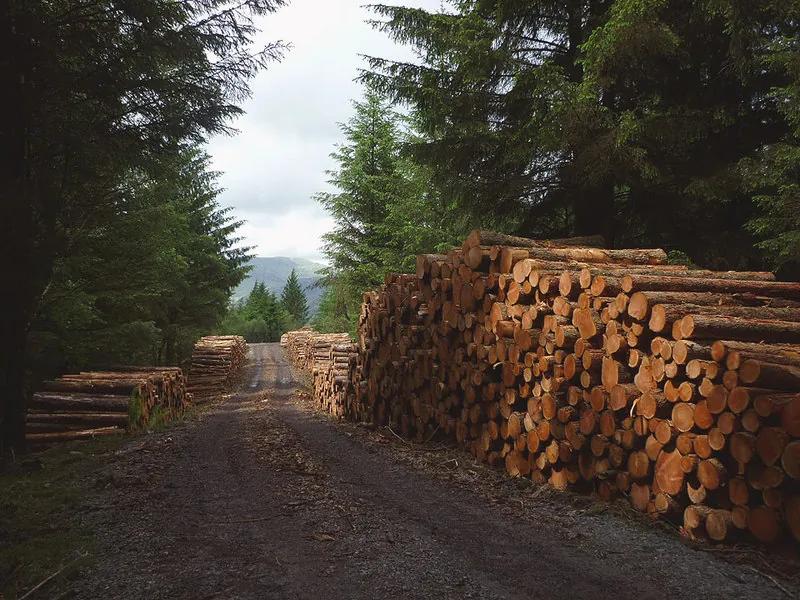
Timber, food, energy and water
Timber from tropical, temperate and boreal forests builds homes, furniture and paper and, poorly managed, drives the deforestationThe clearance of forest so that land is converted to another use. you have already studied. Food includes crops and livestock from converted ecosystemA system of organisms interacting with each other and with their non-living environment. *and* wild foods — fish, bushmeat, fruit, honey — that still matter to many rural diets. Energy from ecosystems includes fuelwoodWood collected or harvested for burning to provide heat or energy. and charcoal (still common in parts of rural Kenya), hydropowerElectricity generated by using moving or falling water to drive turbines. from forested catchments, and some modern biomassOrganic material used as fuel, including wood, crop residues and animal waste. or biogas. Water resources depend on catchments: forests and wetlandLand permanently or seasonally saturated with water, supporting plants adapted to waterlogged conditions. slow runoff, storeA part of a system in which water or other material is held for a period of time. water and filter sediment. Upland peat and moorland in the UK, including parts of Dartmoor, feed reservoirAn artificial lake used to store water for supply, power generation or flood management. that supply distant cities — a rural service consumed in urban taps.
Health, tourism, protection and climate
Health services in the specification’s language means medicines and the wider wellbeing people get from ecosystemA system of organisms interacting with each other and with their non-living environment.: plant-derived drugs, traditional remedies, and mentally restorative green space. Quinine from cinchona is a historical medicine example; many prescriptions still have plant or microbial origins. Tourism sells the experience of a biomeA large ecological region characterised by its climate and dominant vegetation, with associated animal communities. — safari savannas, rainforest lodges, Dartmoor walking, coral reefA marine ecosystem built from the calcium carbonate skeletons of reef-forming corals, usually in warm, shallow tropical seas. — and can fund conservationThe protection and careful management of environments and resources to maintain them for the future. or degrade the path it loves through trampling, waste and water demand. Natural protection includes mangroveA salt-tolerant tree or shrub growing in sheltered tropical intertidal environments, trapping sediment and reducing wave energy. and reefs that cut storm-wave energy (Coasts), forests that bind slopes, and dryland vegetation that holds soil. The Sundarbans mangrove forest on the Bangladesh coast is a protection service as well as a timber and fishery source. climate regulationThe influence of ecosystems on climate through processes such as carbon storage, shading and water cycling. is the carbon stored in forests, peat and soils, plus local cooling from shade and evapotranspirationThe combined transfer of water to the atmosphere by evaporation and transpiration.. Losing those storeA part of a system in which water or other material is held for a period of time. is the deforestationThe clearance of forest so that land is converted to another use.–climateThe average weather conditions and their variability in a place over a long period, usually at least 30 years. link from Topic 7.
Using a service can still damage it
The rural question is how people exploit these systems. A forest that yields timber sustainably, nuts and tourism can remain a forest (the extractive-reserve idea). The same forest clear-felled for a few years of cattle money yields a short-term good and loses most of the services. A UK upland managed only for maximum sheep numbers may lose water quality and carbon in degraded peat. Flow diagrams — skill (2) in the next lesson — help you show those knock-ons. Already in this lesson, practise sentences of the form “people gain X, and the system loses Y unless harvesting stays below recovery”.
Valuation without pretending everything has a barcode
Some services now have market values (timber prices, tourist fees, carbon credits). Many do not appear until they fail: a flood after wetlandLand permanently or seasonally saturated with water, supporting plants adapted to waterlogged conditions. were drained, a fishery collapse after mangroveA salt-tolerant tree or shrub growing in sheltered tropical intertidal environments, trapping sediment and reducing wave energy. went. Exam answers that only list the eight words score lower than answers that explain one good and one service with a located mechanism.
Exam workshop
If a photograph shows a mangroveA salt-tolerant tree or shrub growing in sheltered tropical intertidal environments, trapping sediment and reducing wave energy., write protection, nursery habitat for food fish, and possible tourism or wood collection. If it shows a UK moorland reservoirAn artificial lake used to store water for supply, power generation or flood management., write water supply to cities, hill-farm food, tourism, and peatland climate regulationThe influence of ecosystems on climate through processes such as carbon storage, shading and water cycling.. If it shows a rainforest, timber, food, medicines, tourism and carbon. Always add one riskThe combination of the likelihood of harm and the seriousness of its consequences. of over-use.
Worked example: Dartmoor’s blanket bogs storeA part of a system in which water or other material is held for a period of time. carbon and feed rivers; walkers generate tourism income; over-burning or over-grazing can damage the peat and the water service at the same time. That single upland therefore illustrates several specification examples at once.
Use the command word as a checklist (r02 extra 1). Describe only what the resource shows, then explain with a named rural heading or factor, then judge using sustainability or fairness. A short located detail from Devon or Machakos is worth more than a generic sentence about 'the countryside'. If two indicators move in different directions, say so instead of forcing a single happy or unhappy story. That is how quality-of-life data should be read in this topic.
Use the command word as a checklist (r02 extra 2). Describe only what the resource shows, then explain with a named rural heading or factor, then judge using sustainability or fairness. A short located detail from Devon or Machakos is worth more than a generic sentence about 'the countryside'. If two indicators move in different directions, say so instead of forcing a single happy or unhappy story. That is how quality-of-life data should be read in this topic.
Use the command word as a checklist (r02 extra 3). Describe only what the resource shows, then explain with a named rural heading or factor, then judge using sustainability or fairness. A short located detail from Devon or Machakos is worth more than a generic sentence about 'the countryside'. If two indicators move in different directions, say so instead of forcing a single happy or unhappy story. That is how quality-of-life data should be read in this topic.
Use the command word as a checklist (r02 extra 4). Describe only what the resource shows, then explain with a named rural heading or factor, then judge using sustainability or fairness. A short located detail from Devon or Machakos is worth more than a generic sentence about 'the countryside'. If two indicators move in different directions, say so instead of forcing a single happy or unhappy story. That is how quality-of-life data should be read in this topic.
Use the command word as a checklist (r02 extra 5). Describe only what the resource shows, then explain with a named rural heading or factor, then judge using sustainability or fairness. A short located detail from Devon or Machakos is worth more than a generic sentence about 'the countryside'. If two indicators move in different directions, say so instead of forcing a single happy or unhappy story. That is how quality-of-life data should be read in this topic.
Evidence, judgement and place names belong together in the closing sentences of a rural exam answer. Evidence, judgement and place names belong together in the closing sentences of a rural exam answer. Evidence, judgement and place names belong together in the closing sentences of a rural exam answer. Evidence, judgement and place names belong together in the closing sentences of a rural exam answer. Evidence, judgement and place names belong together in the closing sentences of a rural exam answer. Evidence, judgement and place names belong together in the closing sentences of a rural exam answer. Evidence, judgement and place names belong together in the closing sentences of a rural exam answer. Evidence, judgement and place names belong together in the closing sentences of a rural exam answer. Evidence, judgement and place names belong together in the closing sentences of a rural exam answer. Evidence, judgement and place names belong together in the closing sentences of a rural exam answer. Evidence, judgement and place names belong together in the closing sentences of a rural exam answer. Evidence, judgement and place names belong together in the closing sentences of a rural exam answer. Evidence, judgement and place names belong together in the closing sentences of a rural exam answer. Evidence, judgement and place names belong together in the closing sentences of a rural exam answer. Evidence, judgement and place names belong together in the closing sentences of a rural exam answer. Evidence, judgement and place names belong together in the closing sentences of a rural exam answer. Evidence, judgement and place names belong together in the closing sentences of a rural exam answer. Evidence, judgement and place names belong together in the closing sentences of a rural exam answer. Evidence, judgement and place names belong together in the closing sentences of a rural exam answer. Evidence, judgement and place names belong together in the closing sentences of a rural exam answer.
Closing application (r02-1). A high-scoring rural paragraph names the place, uses at least one official specification term, and attaches it to something visible in the resource. If the resource is a map, mention a pattern such as isolated inland parishes, a city-edge estate, terraced slopes or a road towards Nairobi. If it is a table, describe the direction of change before you explain it. If it is a photograph or advert, say what is shown and what cannot be proved. quality of lifeThe overall wellbeing of people, including health, security, access to services and satisfaction with their surroundings. should be judged with more than one indicator, because house prices, yields, water access and health can move in different directions for different groups. Sustainability needs a time dimension: a strategy that raises this year's income by stripping soil or pricing out workers is not a finished success. Practice writing a final judgement sentence that uses a criterion such as fairness, environmental recovery or reversibility rather than the words good and bad alone. Teachers will see the difference because your answer will still make sense if the place-name is swapped only when the mechanism itself is truly shared.
Closing application (r02-2). A high-scoring rural paragraph names the place, uses at least one official specification term, and attaches it to something visible in the resource. If the resource is a map, mention a pattern such as isolated inland parishes, a city-edge estate, terraced slopes or a road towards Nairobi. If it is a table, describe the direction of change before you explain it. If it is a photograph or advert, say what is shown and what cannot be proved. Quality of life should be judged with more than one indicator, because house prices, yields, water access and health can move in different directions for different groups. Sustainability needs a time dimension: a strategy that raises this year's income by stripping soil or pricing out workers is not a finished success. Practice writing a final judgement sentence that uses a criterion such as fairness, environmental recovery or reversibility rather than the words good and bad alone. Teachers will see the difference because your answer will still make sense if the place-name is swapped only when the mechanism itself is truly shared.
Closing application (r02-3). A high-scoring rural paragraph names the place, uses at least one official specification term, and attaches it to something visible in the resource. If the resource is a map, mention a pattern such as isolated inland parishes, a city-edge estate, terraced slopes or a road towards Nairobi. If it is a table, describe the direction of change before you explain it. If it is a photograph or advert, say what is shown and what cannot be proved. Quality of life should be judged with more than one indicator, because house prices, yields, water access and health can move in different directions for different groups. Sustainability needs a time dimension: a strategy that raises this year's income by stripping soil or pricing out workers is not a finished success. Practice writing a final judgement sentence that uses a criterion such as fairness, environmental recovery or reversibility rather than the words good and bad alone. Teachers will see the difference because your answer will still make sense if the place-name is swapped only when the mechanism itself is truly shared.
Common misconceptions
Not quite: Ecosystem services are only useful to people who live in the countryside.
Instead: City water, climate regulation and weekend tourism are rural or wild-land functions consumed far away.
Not quite: If a forest is not logged it is providing nothing.
Instead: Standing forest still supplies carbon storage, water regulation, protection and often food or medicine.
Not quite: Tourism is always a gentle, harmless service.
Instead: It can fund conservation and also compact soil, scare wildlife and consume scarce water.
Exam tips
Learn the official eight
{Timber, tourism, food, energy, water, health, natural protection, climate regulation} should be instant recall.
Say good or service
Classification plus a {mechanism} is stronger than a list.
Name a place
Dartmoor peat and water, Amazon carbon and nuts, Sundarbans storm protection, or a reef fishery make the idea geographical.