By the end of this lesson
- Name the United Kingdom and locate rural Devon / South West England as the teaching example.
- Explain the six named factors of rural change with Devon-centred detail.
- Show how those factors can operate together, including both decline and growth.
The named developed country
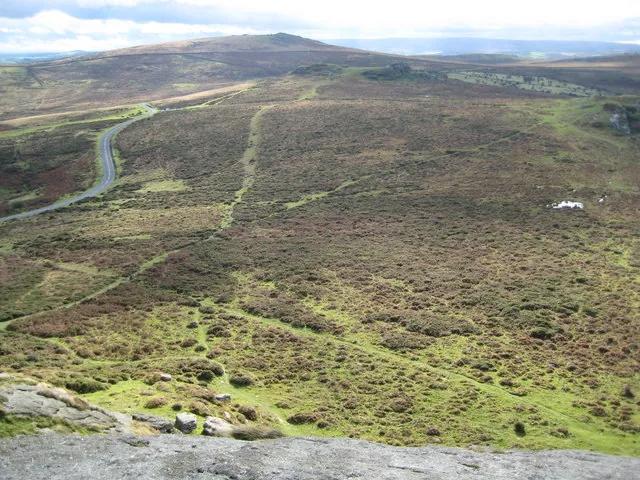
The specification asks for rural change in a named developed country. This course uses the United Kingdom, and it locates much of the detail in Devon and the wider South West — a mix of deep rural interiors, Dartmoor National Park, market towns, and coasts under heavy tourist and second-home pressure. National processes (mechanisationThe replacement or assistance of human labour by machines in production., planning law, road and rail investment, house prices) show up differently in a commuter parish on Exeter’s edge and in an isolated moorland hamlet. Use Devon as the located canvas, not as if every British village were Salcombe or Princetown.
Isolation and the decline of farm employment
rural isolationLimited access to services, employment and social contact caused by distance, weak transport links or poor connectivity. is about more than pretty emptiness. Parts of inland Devon have sparse evening buses, long trips to a district hospital or sixth form, patchy mobile coverage in folds of land, and winter roads over the moor. Isolation raises living costs, deters some employers, and encourages young people to leave. It can be reduced by better broadband (which allows some professional work from converted barns) without disappearing as a social fact for anyone who does not drive.
Decline in farm employment is a long national story: machines, larger holdings, and imported food mean UK agriculture produces a great deal with around 1% of the workforce. Dairy, beef and mixed farms remain visually dominant in much of Devon, but many holdings employ few people beyond the farm family, and some have gone out of dairying altogether. Tied cottages empty; agricultural suppliers in small towns lose tradeThe exchange of goods and services between people, businesses or countries.; the village’s economic base shifts.
Tourism, suburbanisation and counter-urbanisation
Tourist pressures are intense on Dartmoor, along the south Devon coast and in honeypot villages. Positives include jobs in hospitality, farm diversificationThe development of additional farm income sources, such as tourism or specialist products, alongside traditional farming. into holiday cottages, and a reason to conserve landscape. Negatives include congestionOvercrowding of a transport network that slows movement as demand approaches or exceeds capacity. on narrow lanes, footpath erosionThe wearing away and removal of rock or sediment by moving water, ice or wind., seasonal employment, and house prices pulled up by second homes and short-lets, which can lock local workers out of the housing market. Tourism does not “save” every inland parish; some see the cars pass through to the coast.
suburbanisationThe growth of outer urban areas as people and activities move from central parts of a city to its suburbs. spreads city-edge housing, retail and business parkA planned cluster of offices and commercial premises, often on an accessible suburban or edge-of-city site. into formerly rural land — around Exeter and Plymouth this is visible as new estates and ring-road services. Villages become physically joined to the urban area or functionally suburban even if a green gap remains. counter-urbanisationThe movement of people from urban areas to smaller settlements and rural areas. is the move of people and some businesses from larger cities into smaller towns and villages beyond the suburbAn outer residential area of a town or city, usually less densely built than its centre., seeking space, perceived safety or landscape. It can rejuvenate a primary school and a shop — and it can raise prices, change the social mix, and create commuter traffic on lanes never built for it. In Devon, rail links such as the route to Exeter and, for some, longer commutes or hybrid work after broadband upgrades have made counter-urbanisation more possible, though it is socially selective.
The negative multiplier
The negative multiplier effectA chain of economic decline in which an initial loss of jobs or spending reduces demand and employment elsewhere. is a downward spiral: jobs go (a farm supplier closes, a bus is withdrawn, a pub fails), people leave or spend less locally, more services close, the place becomes even less attractive to employers. It is the opposite of a virtuous tourist or commuter boom. Some Devon inland settlements have flirted with this spiral; others have escaped it through a school staying open, a new care home, a farm shop, or arrivals of remote workers. Write the multiplier effectThe additional economic activity generated as initial spending creates income that is spent again in the local economy. as a possible chain, then test it against the place you are given — examiners dislike automatic decline stories about all British villages.
Pulling the six factors into one system
Isolation makes service loss more likely; farm-job decline removes a traditional employer; tourism and counter-urbanisationThe movement of people from urban areas to smaller settlements and rural areas. can offset or worsen housing pressure; suburbanisationThe growth of outer urban areas as people and activities move from central parts of a city to its suburbs. consumes rural land on the city edge. Government planning, national-park purposes and agricultural-payment reforms after the UK’s departure from the EU all steer the mix, which the later management and case-study lessons pick up.
Exam workshop
Name the UK and Devon (or the South West) early. Use all six specification phrases: {rural isolation, decline in farm employment, tourist pressures, suburbanisationThe growth of outer urban areas as people and activities move from central parts of a city to its suburbs., counter-urbanisationThe movement of people from urban areas to smaller settlements and rural areas., negative multiplier effectThe additional economic activity generated as initial spending creates income that is spent again in the local economy.}. Attach each to a concrete clue (an evening-bus gap, a dairy closure, a honeypot car park, an Exeter-edge estate, a converted barn office, a closed village shop). Then judge which process dominates *that* settlement rather than claiming the whole county is emptying or filling.
Worked example: a coastal parish with high second-home rates and summer congestionOvercrowding of a transport network that slows movement as demand approaches or exceeds capacity. is a tourism-and-housing story; a parish on Exeter’s fringe is suburbanisation; a moorland hamlet with no shop is isolation plus farm-job decline, with tourism passing through. Same named country, three different rural changes.
Closing application (r05-1). A high-scoring rural paragraph names the place, uses at least one official specification term, and attaches it to something visible in the resource. If the resource is a map, mention a pattern such as isolated inland parishes, a city-edge estate, terraced slopes or a road towards Nairobi. If it is a table, describe the direction of change before you explain it. If it is a photograph or advert, say what is shown and what cannot be proved. quality of lifeThe overall wellbeing of people, including health, security, access to services and satisfaction with their surroundings. should be judged with more than one indicator, because house prices, yields, water access and health can move in different directions for different groups. Sustainability needs a time dimension: a strategy that raises this year's income by stripping soil or pricing out workers is not a finished success. Practice writing a final judgement sentence that uses a criterion such as fairness, environmental recovery or reversibility rather than the words good and bad alone. Teachers will see the difference because your answer will still make sense if the place-name is swapped only when the mechanism itself is truly shared.
Closing application (r05-2). A high-scoring rural paragraph names the place, uses at least one official specification term, and attaches it to something visible in the resource. If the resource is a map, mention a pattern such as isolated inland parishes, a city-edge estate, terraced slopes or a road towards Nairobi. If it is a table, describe the direction of change before you explain it. If it is a photograph or advert, say what is shown and what cannot be proved. Quality of life should be judged with more than one indicator, because house prices, yields, water access and health can move in different directions for different groups. Sustainability needs a time dimension: a strategy that raises this year's income by stripping soil or pricing out workers is not a finished success. Practice writing a final judgement sentence that uses a criterion such as fairness, environmental recovery or reversibility rather than the words good and bad alone. Teachers will see the difference because your answer will still make sense if the place-name is swapped only when the mechanism itself is truly shared.
Closing application (r05-3). A high-scoring rural paragraph names the place, uses at least one official specification term, and attaches it to something visible in the resource. If the resource is a map, mention a pattern such as isolated inland parishes, a city-edge estate, terraced slopes or a road towards Nairobi. If it is a table, describe the direction of change before you explain it. If it is a photograph or advert, say what is shown and what cannot be proved. Quality of life should be judged with more than one indicator, because house prices, yields, water access and health can move in different directions for different groups. Sustainability needs a time dimension: a strategy that raises this year's income by stripping soil or pricing out workers is not a finished success. Practice writing a final judgement sentence that uses a criterion such as fairness, environmental recovery or reversibility rather than the words good and bad alone. Teachers will see the difference because your answer will still make sense if the place-name is swapped only when the mechanism itself is truly shared.
Closing application (r05-4). A high-scoring rural paragraph names the place, uses at least one official specification term, and attaches it to something visible in the resource. If the resource is a map, mention a pattern such as isolated inland parishes, a city-edge estate, terraced slopes or a road towards Nairobi. If it is a table, describe the direction of change before you explain it. If it is a photograph or advert, say what is shown and what cannot be proved. Quality of life should be judged with more than one indicator, because house prices, yields, water access and health can move in different directions for different groups. Sustainability needs a time dimension: a strategy that raises this year's income by stripping soil or pricing out workers is not a finished success. Practice writing a final judgement sentence that uses a criterion such as fairness, environmental recovery or reversibility rather than the words good and bad alone. Teachers will see the difference because your answer will still make sense if the place-name is swapped only when the mechanism itself is truly shared.
Closing application (r05-5). A high-scoring rural paragraph names the place, uses at least one official specification term, and attaches it to something visible in the resource. If the resource is a map, mention a pattern such as isolated inland parishes, a city-edge estate, terraced slopes or a road towards Nairobi. If it is a table, describe the direction of change before you explain it. If it is a photograph or advert, say what is shown and what cannot be proved. Quality of life should be judged with more than one indicator, because house prices, yields, water access and health can move in different directions for different groups. Sustainability needs a time dimension: a strategy that raises this year's income by stripping soil or pricing out workers is not a finished success. Practice writing a final judgement sentence that uses a criterion such as fairness, environmental recovery or reversibility rather than the words good and bad alone. Teachers will see the difference because your answer will still make sense if the place-name is swapped only when the mechanism itself is truly shared.
Closing application (r05-6). A high-scoring rural paragraph names the place, uses at least one official specification term, and attaches it to something visible in the resource. If the resource is a map, mention a pattern such as isolated inland parishes, a city-edge estate, terraced slopes or a road towards Nairobi. If it is a table, describe the direction of change before you explain it. If it is a photograph or advert, say what is shown and what cannot be proved. Quality of life should be judged with more than one indicator, because house prices, yields, water access and health can move in different directions for different groups. Sustainability needs a time dimension: a strategy that raises this year's income by stripping soil or pricing out workers is not a finished success. Practice writing a final judgement sentence that uses a criterion such as fairness, environmental recovery or reversibility rather than the words good and bad alone. Teachers will see the difference because your answer will still make sense if the place-name is swapped only when the mechanism itself is truly shared.
Common misconceptions
Not quite: The British countryside is emptying everywhere.
Instead: Some rural areas gain people through counter-urbanisation and suburbanisation while others lose services.
Not quite: Tourism automatically solves rural decline.
Instead: It brings jobs and can also bring congestion, seasonal work and housing that local workers cannot afford.
Not quite: Counter-urbanisation is the same as suburbanisation.
Instead: Suburbanisation is the city edge spreading out. Counter-urbanisation jumps further, into towns and villages beyond the continuous built-up area.
Exam tips
Name the country and a place
{The United Kingdom, illustrated by rural Devon / the South West} should appear in the first five lines.
Use all six official factors
Do not replace them with vague “modern life” language.
Avoid one story for every village
Tourism, suburbanisation and the negative multiplier can all be true in different parishes of the same county.