By the end of this lesson
- Locate the London Docklands Development Corporation and the Eldonian Village as contrasting UK projects that try to promote development inside a high-income country.
- Explain advantages and disadvantages of each project for jobs, housing, infrastructure, community voice and who captures the gains.
- Evaluate top-down and bottom-up strategies across development levels by comparing the UK pair with Three Gorges in China and Grameen/BRAC in Bangladesh.
Why a developed-country pair is needed
The specification asks for the advantages and disadvantages of top-downDescribes development planned and directed by governments or large organisations, with limited local control. and bottom-upDescribes development led by local communities, responding to their priorities and involving them in decisions. developmentImprovement in people's living conditions and opportunities, assessed through economic, social and political measures. projects “used to promote development in a named developed and a named emerging or developing country”. The previous lesson gave you a clear method contrast: the Three Gorges Dam on China’s Yangtze is top-down in an emerging economy; microfinanceSmall-scale financial services, including loans and savings, offered to people excluded from conventional banking. and BRAC are bottom-up in Bangladesh. That pairing is worth keeping, because it shows how scale and power work when a state can mobilise a megadam or when household credit is the tool that actually reaches rural women. It does not, by itself, satisfy the developed-country half of the wording. China and Bangladesh are not developed countries in the sense the specification uses.
This lesson therefore adds a named developed country: the United Kingdom. Development here does not mean raising national gross domestic productThe total value of goods and services produced within a country's borders over a given period, usually a year. from a low base. It means tackling uneven development inside a high-income state — derelict dockland, lost industrialDescribes an economy with a substantial manufacturing sector as production expands beyond primary activities. jobs, poor housing and communities with little say over what replaces the factories and wharves they used to work in. The methods are the same ones you have already defined. Top-down still means a central authority plans, funds and often overrides local councils. Bottom-up still means local people and local organisations design and run a project, usually at a smaller scale.
The UK pair taught here is the London Docklands Development Corporation (LDDC), created in 1981 and wound up in 1998, set against the Eldonians in Vauxhall, Liverpool, who formed a housing co-operative in 1983 and built a community-owned village on a former industrial site. Both responded to deindustrialisationA decline in manufacturing employment or its share of an economy's activity. and dock decline in the same decade. One was appointed by national government and backed by an enterprise zoneA designated area offering incentives such as tax relief to attract businesses, investment and jobs.. The other was started by residents who refused to be dispersed. Together they let you practise the same evaluation grid as China and Bangladesh, then ask whether “success” looks different in a developed country.
Exam tip: if a question asks for a {named developed country}, use {the UK: LDDC and the Eldonians}. Do not stretch China into that role.
The LDDC as a top-down project
By the early 1980s the enclosed docks of east London had closed as container shipping moved downstream, leaving vacant land, unemploymentThe condition of being without paid work while available for and seeking employment. and communities that had lost the port jobs the area was built around. The UK government responded with urban development corporationA government-created body given powers to regenerate a designated urban area through planning, land assembly and investment., a top-downDescribes development planned and directed by governments or large organisations, with limited local control. tool created under the Local Government, Planning and Land Act 1980. The first two were the LDDC and the Merseyside developmentImprovement in people's living conditions and opportunities, assessed through economic, social and political measures. Corporation, both launched in 1981. The LDDC’s area covered about {22 square kilometres} (eight and a half square miles) across the London boroughs of Tower Hamlets, Newham and Southwark. It was appointed by central government, not elected locally. It could assemble land, including by vesting public land and using compulsory purchase, it took over development-control powers from the three boroughs, and it spent government grant on reclaiming sites and providing infrastructureThe basic networks and facilities, such as roads, water supply and electricity, that support an economy and daily life. so that private developers would invest.
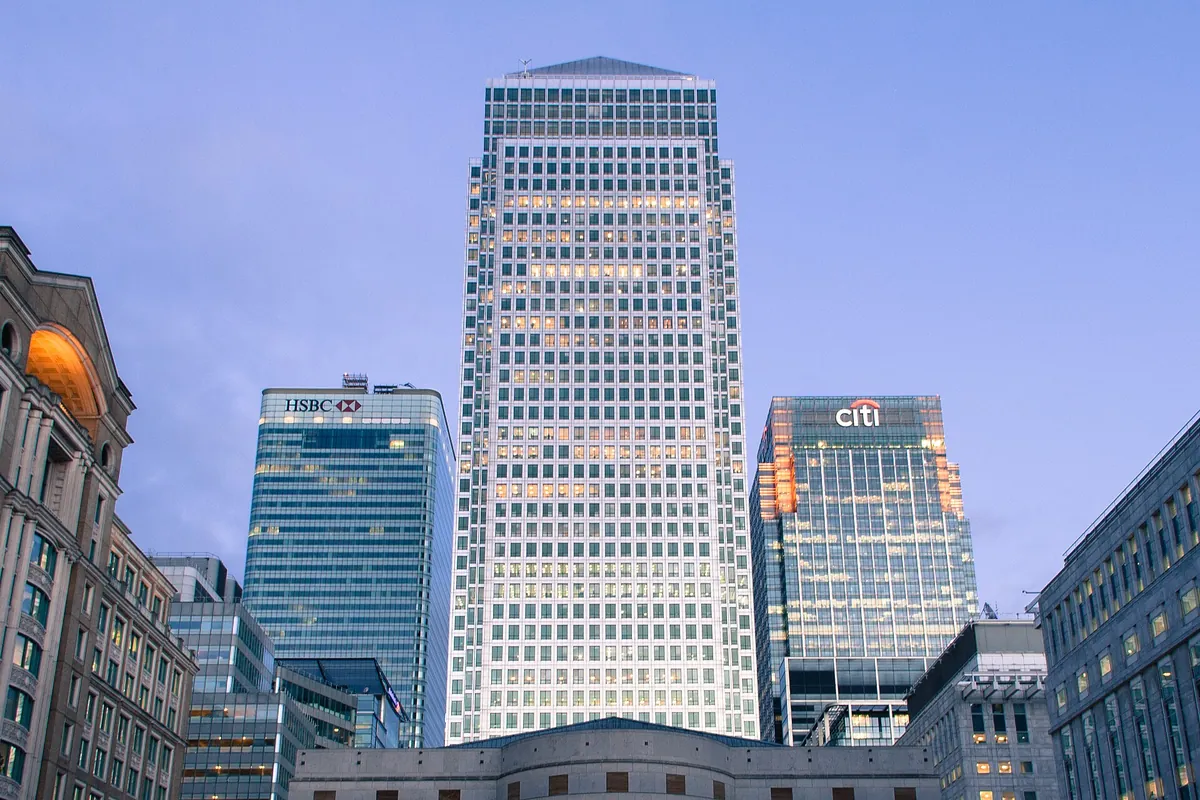
On {26 April 1982} a large part of the Isle of Dogs was designated an enterprise zoneA designated area offering incentives such as tax relief to attract businesses, investment and jobs., one of the first round of UK zones. For ten years, until 1992, occupiers were freed from local business rates and developers could claim generous tax allowances on new commercial buildings. Planning rules inside the zone were simplified. The aim was to make a difficult, image-poor site attractive to private capital quickly. The flagship that followed was Canary Wharf. After earlier proposals struggled to find backing, the Canadian developers Olympia & York signed a master building agreement with the LDDC in 1987. Construction of the first phase followed, and One Canada Square, the first Canary Wharf tower, was completed in 1991. Olympia & York later collapsed during a property slump in 1992; the estate was rescued and building continued under later owners. Even a powerful top-down project remains exposed to property markets.
The LDDC also unlocked transport that a neighbourhood committee could not have built. The Docklands Light Railway opened in 1987 and was later extended, including to Bank in 1991. London City Airport in the Royal Docks opened to commercial flights in 1987. The Jubilee line extension, which opened in 1999 after the LDDC had ended, later tied the area more firmly into central London. Those are classic top-down public goods: they change what the land is worth and who can reach it.
Advantages and disadvantages of Docklands regeneration
The advantages are easiest to see on a skyline photograph. A closed port became a second financial district for London, with offices, transport and a transformed physical environment. The state used its power to assemble land and reduce riskThe combination of the likelihood of harm and the seriousness of its consequences. for investors, which is something markets had not done while the docks sat empty. enterprise zoneA designated area offering incentives such as tax relief to attract businesses, investment and jobs. tax breaks and simplified planning sped up commercial developmentImprovement in people's living conditions and opportunities, assessed through economic, social and political measures.. New transport cut the isolation of the Isle of Dogs and the Royal Docks. For the national economy, Canary Wharf added office capacity that the City of London alone was not then providing. For later residents and workers who moved in, the area offered jobs in finance, business services and supporting activities, and a newly built townscape rather than abandoned wharves.
The disadvantages are about {who decides} and {who captures the gains}. Local boroughs lost planning control, so elected local government could not easily shape or refuse the model. Many original Docklands residents argued that the new office jobs did not match their skills, that new housing was often too expensive, and that the place was being remade for incoming workers rather than for the people who had lived through the docks’ decline. Community groups campaigned against the lack of affordable housing and against a style of regeneration they had not chosen. That is the developed-country version of the top-downDescribes development planned and directed by governments or large organisations, with limited local control. critique you met at Three Gorges: development done *to* a place can produce national or city-wide gains while leaving local welfare only partly improved. The core evaluative tension is distribution, not whether buildings appeared.
Do not memorise a single jobs total. Employment in the area rose sharply as offices replaced the closed docks, and later estimates vary by year and by whether they count only Canary Wharf, the wider Docklands, or induced jobs elsewhere. In an exam, “a large new office and service economy, reached by new rail and air links” is safer than an invented headcount. Likewise, avoid a made-up cost for Canary Wharf or a claim that “everyone local benefited” or that “nobody local did”. The honest judgement is mixed: impressive physical and economic transformation, weaker performance on voice, affordability and fit with the pre-existing community.
The Eldonians as a bottom-up project
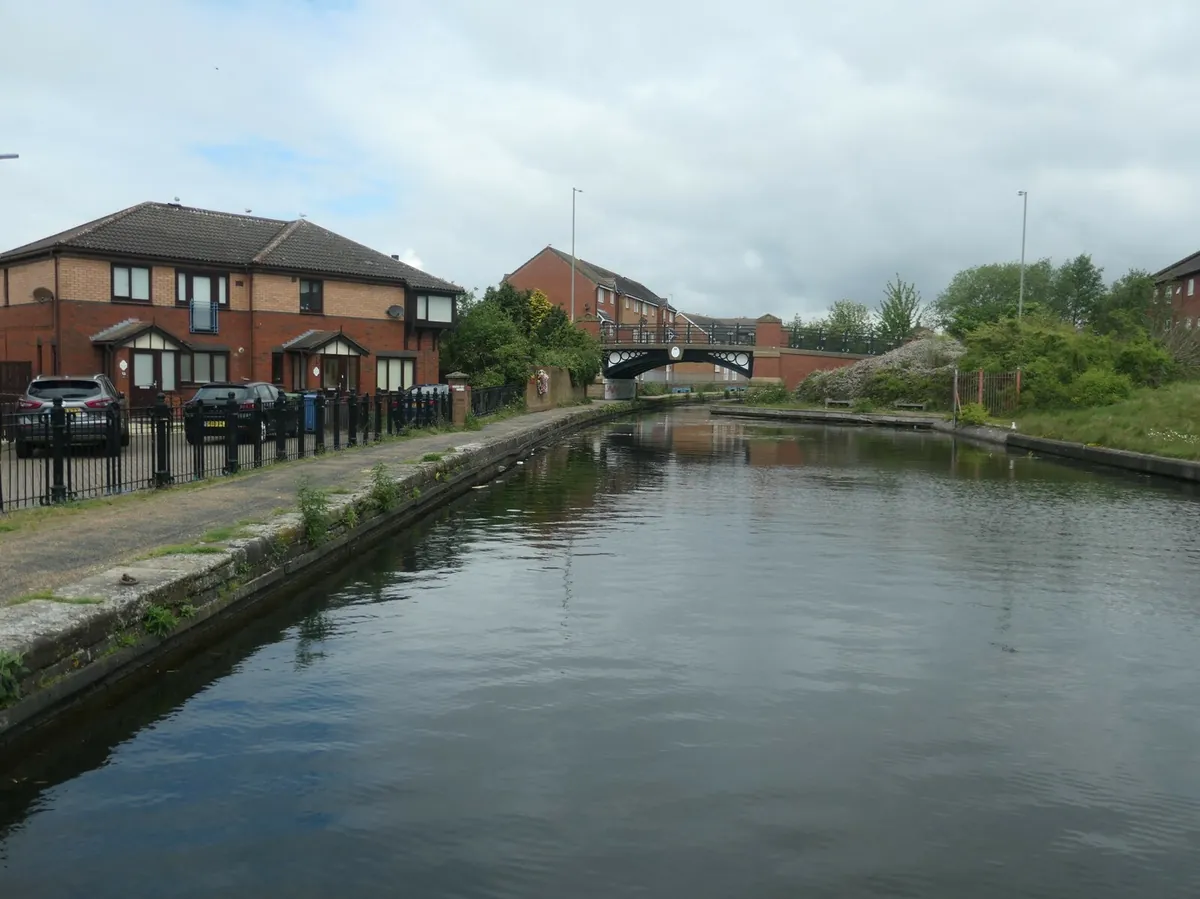
Inner Liverpool faced a parallel shock. Vauxhall, just north of the city centre, had grown around the north docks and nearby factories. As those docks declined, major employers closed. The Tate & Lyle sugar refinery on Vauxhall Road shut in 1981, and the British American Tobacco plant also closed; the Eldonians’ own history records that these closures together cost the area {over 3,000 local jobs} and left a large, contaminated site. Housing was poor, and Liverpool City Council planned to clear old tenements and disperse residents across Merseyside. In {1978} local people had already formed the Portland Gardens Co-operative to try to keep the community together. After a change of council in 1983 threatened to municipalise that effort and scatter the population again, tenants from Eldon Street and Burlington Street set up what became the Eldonian housing co-operative in 1983.
Their project was bottom-upDescribes development led by local communities, responding to their priorities and involving them in decisions. in method even though it still needed public support, planning permission and later grant or loan finance — bottom-up does not mean “no state involved”. Residents organised, refused dispersal, and then built a new Eldonian Village on the former Tate & Lyle site rather than accepting that the only future was clearance. Homes were designed with strong resident participation. The village added community facilities such as a hall, sports provision and support for older people, owned and managed locally rather than handed to a distant landlord. The community-based housing association that grew from the co-operative now manages {over 380 homes} in the Vauxhall area. In 2004 the Eldonian Village won a World Habitat Award for community-led regeneration that had turned derelict, polluted land into affordable rented housing and locally owned facilities.
That record shows the advantages of bottom-up work in a developed country. The project matched a clearly stated local goal: keep friends, family and mutual support in one place, with decent homes people could afford. Residents had a voice in design and later management. Failures, had they occurred, would have been local rather than city-wide. The village created a durable community asset, not only a one-off protest. It also shows limits. Several hundred homes cannot restart a regional port economy or replace thousands of lost factory jobs by themselves. Progress was slower than a developmentImprovement in people's living conditions and opportunities, assessed through economic, social and political measures. corporation armed with vesting powers. The group had to fight political opposition and assemble technical help. “Community” is not automatically inclusive: the Eldonians succeeded in part because they were unusually organised and persistent. Other neighbourhoods with the same need did not get the same outcome.
Comparing the two UK projects
Place the two projects on the same grid you used for China and Bangladesh. The LDDC’s purpose was city-wide and national: reclaim a strategic site, attract private investment, and reconnect east London to the rest of the metropolitan economy. The Eldonians’ purpose was neighbourhood welfare: remain together, in better homes, with facilities they controlled. The LDDC decided from the centre, with an appointed board and ministers behind it. The Eldonians decided through a co-operative of residents, then a community-based association. The LDDC operated across about 22 square kilometres and helped unlock a new office district; the Eldonians operate on the scale of one village of a few hundred homes. Each scale matches its missing factor. Docklands needed land assembly, tax policy and railway engineering. Vauxhall needed organising power and housing that would not price the existing community out.
Other UK bottom-upDescribes development led by local communities, responding to their priorities and involving them in decisions. tools belong in the same family, even if you should not pretend you have studied each of them in depth. development trustA community-led organisation that manages assets and projects to improve local economic, social and environmental conditions. are community organisations that own local assets — buildings, land or enterprises — and reinvest any surplus in the neighbourhood. credit unionA financial cooperative owned by its members that provides savings and affordable loans. are member-owned financial co-operatives that take savings and make affordable loans, a developed-country cousin of the idea that people poorly served by commercial banks can organise their own finance. In London, Coin Street Community Builders, formed in 1984 on the South Bank after a long campaign against a large office scheme, is another bottom-up housing and social-enterprise example. Mention them to show that the Eldonians are not a one-off curiosity. Keep the named, examinable pair as {LDDC / Canary Wharf} and {the Eldonians}.
Later UK governments have also returned to top-downDescribes development planned and directed by governments or large organisations, with limited local control. regional language. The Northern Powerhouse was launched as a policy idea in 2014, aimed at joining and strengthening city economies in the north of England. The Levelling Up white paper followed in 2022. Treat those as evidence that internal uneven developmentImprovement in people's living conditions and opportunities, assessed through economic, social and political measures. has not disappeared, not as projects whose jobs totals or success you must memorise. They are too recent, too broad and too politically contested to carry the same case-study weight as the LDDC, which has a clear start date, end date and built outcome.
Judging success across development levels
You now have three countries and four named projects. Three Gorges supplies hydropowerElectricity generated by using moving or falling water to drive turbines., flood-control storage and navigation at a scale only a central state can attempt, at the cost of about 1.3 million people displaced and serious environmental debate. Grameen and BRAC supply small credit, women’s participation and rural services, but they cannot build a national power system or a multi-purpose damA barrier across a river that holds back water and regulates downstream flow.. The LDDC shows that a rich country uses top-downDescribes development planned and directed by governments or large organisations, with limited local control. tools too: not to raise human development indexA composite development measure combining life expectancy, education and gross national income per person. from a low base, but to recycle valuable urban land and plug a world city into new office and transport networks. The Eldonians show that bottom-upDescribes development led by local communities, responding to their priorities and involving them in decisions. tools in a rich country are often about housing, voice and keeping a community intact after industrialDescribes an economy with a substantial manufacturing sector as production expands beyond primary activities. collapse, rather than about a first loan for a goat or a stall.
The evaluative lesson is that {the missing factor changes with developmentImprovement in people's living conditions and opportunities, assessed through economic, social and political measures. level}, while {the method’s strengths and weaknesses travel}. Top-down projects are good at large public goods and speed once approved, and weak at local consent and at protecting people who are in the way. Bottom-up projects are good at fit, voice and household or neighbourhood welfare, and weak at national infrastructureThe basic networks and facilities, such as roads, water supply and electricity, that support an economy and daily life. and at reaching every place that needs them. In Bangladesh, a binding constraint for many rural women has been access to fair finance and basic services. In China, a binding constraint for industrialising regions has included energy, flood riskThe likelihood of flooding combined with its potential consequences for people, property and environments. and interior–coast transport. In the UK, a binding constraint in Docklands and Vauxhall was what happens to people and land after the docks and factories close. Asking “did it work?” without saying “worked at what?” produces slogans, not geography.
Exam tip: start by naming the country and the method, then choose two or three criteria — {jobs}, {housing}, {environment}, {who decided}, {who paid}, {whether losers were heard}. A strong developed-country paragraph pair might be: “The LDDC was top-down because an appointed corporation, backed by an enterprise zoneA designated area offering incentives such as tax relief to attract businesses, investment and jobs., took planning power from local boroughs… This produced new transport and a large office district at Canary Wharf, but many existing residents saw limited gains in affordable housing and suitable jobs. By contrast, the Eldonians were bottom-up because residents formed a co-operative to avoid dispersal and built a community-owned village of a few hundred homes… This protected local voice and tenure, but could not, by itself, replace thousands of lost industrial jobs.” Finish with a judgement that uses the question’s scale. A question about national energy is not asking for the Eldonians. A question about community welfare in a developed city is not asking you to retell Three Gorges.
If the paper gives you an unseen project — a high-speed railway, a state housing programme, a community energy co-operative or a local credit unionA financial cooperative owned by its members that provides savings and affordable loans. — classify it first, then borrow criteria from the named cases rather than inventing details. Cautious numbers only: LDDC 1981–1998; Isle of Dogs Enterprise Zone 1982–1992; DLR and London City Airport 1987; One Canada Square completed 1991; Eldonian co-operative 1983; World Habitat Award 2004; over 380 homes managed by the association; over 3,000 local jobs lost when Tate & Lyle and the tobacco plant closed, according to the community’s own history. Do not invent the cost of Canary Wharf, a single Docklands jobs total, or a claim that Levelling Up has or has not “worked”.
The topic’s arc is now complete on the specification’s own terms. You can define and measure development, explain why it is uneven globally and inside India, read demographic evidence, judge international strategies and competing views, compare top-down and bottom-up projects in emerging and developing Asia, and do the same inside a named developed country. Pick the slice the question actually asks for.
Top-down and bottom-up projects in the UK, read against China and Bangladesh
The UK pair uses the same methods as the China and Bangladesh pair, but the missing factor is internal regeneration rather than national catch-up.
| Theme | LDDC / Canary Wharf, UK (top-down) | Eldonians, Liverpool, UK (bottom-up) |
|---|---|---|
| What it mainly supplies | Land assembly, transport and a new office district on former docks | Affordable community-owned homes and local facilities that keep residents together |
| Who decides | Appointed corporation and central government, with private developers | Resident co-operative / community-based housing association |
| Scale | About 22 km² of east London | A village of a few hundred homes on a former factory site |
| Clear advantage | Can unlock infrastructure and investment no neighbourhood group could fund | Matches local housing needs; residents have a lasting voice |
| Clear disadvantage | Local councils lost planning control; gains often went to incoming workers and higher-cost housing | Cannot replace a lost regional industrial economy on its own |
| Link to the other pair | Like Three Gorges, strong on large public goods and weak on local consent | Like Grameen/BRAC, strong on fit and participation and limited as national infrastructure |
Common misconceptions
Not quite: Top-down projects only happen in emerging or developing countries.
Instead: The LDDC shows a developed state using the same method to regenerate a strategic urban site.
Not quite: Bottom-up projects in rich countries are just hobbies or protests.
Instead: The Eldonians built lasting, community-owned housing and won international recognition in 2004.
Not quite: A skyline of new offices means every local resident gained.
Instead: Physical transformation can outpace affordable housing, suitable jobs and local control.
Exam tips
Name the developed country first
Use {the UK}. {Top-down: LDDC, 1981–1998, Canary Wharf}. {Bottom-up: the Eldonians, Liverpool, from 1983}.
Keep UK numbers cautious
{Enterprise Zone 1982–1992}; {DLR and London City Airport 1987}; {One Canada Square 1991}; {World Habitat Award 2004}; {over 380 homes}; no invented jobs total for Docklands.
Judge across three countries
Ask what missing factor each project supplies, then reuse criteria: economy, welfare, environment and who had a voice.