By the end of this lesson
- Describe rural Machakos using the official characteristic headings.
- Explain how population, landholdings, drought and migration have changed the area, and how people have responded.
- Evaluate how far terracing, trees, off-farm income and institutions have made rural life more sustainable.
Locating the case
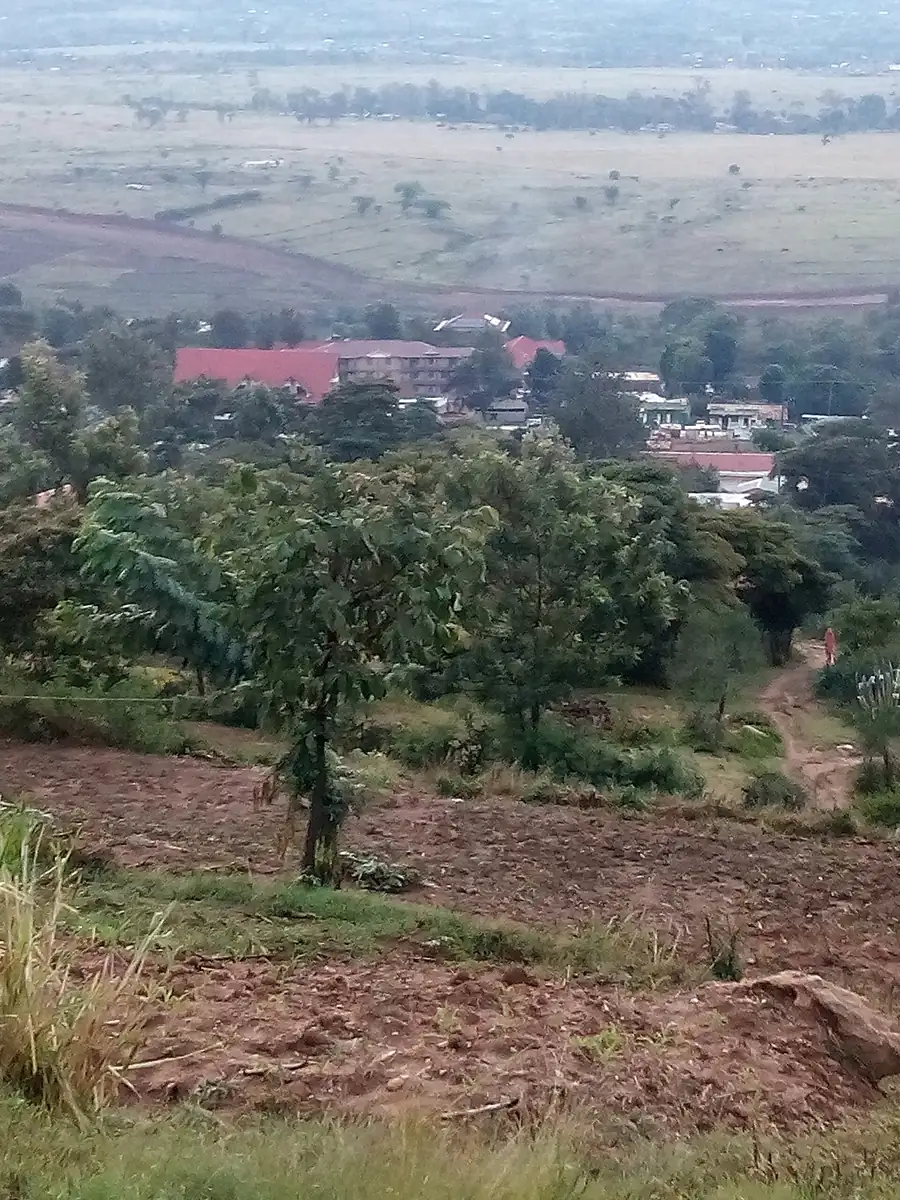
This in-depth case study is rural Machakos, Kenya — hill and plateau country east-south-east of Nairobi, largely farmed by Akamba households on small plots (often called *shambas*). Rainfall is seasonal and unreliable by English standards: enough in better years for maize, beans, fruit trees and, historically, some coffee on favoured slopes; harsh in droughtA prolonged period of unusually low precipitation that creates water deficits for ecosystems and people. years. Soils on slopes erode easily once vegetation is removed, which is why colonial officers sounded alarms in the 1930s and why later terraces matter so much to the story. Machakos is close enough to Nairobi for market access and migrationThe movement of people from one place to another to live for a significant period., which makes it a different rural world from Kenya’s remote dry north.
Characteristics
Landscape and climate: dissected hills, red soils, seasonal rains, droughtA prolonged period of unusually low precipitation that creates water deficits for ecosystems and people. hazardA potential source of harm to people, property or the environment.. Settlement and population: dispersed farmsteads and trading centres rather than a single nucleated English village pattern; a youthful population compared with Devon; rising densities over the twentieth and early twenty-first centuries. Land use and employment: smallholder mixed farming — food crops, some cash crops, trees, and often a few livestock — plus off-farm work and remittancesMoney sent by migrants to people in their place of origin, often supporting household spending and investment.. accessibilityThe ease with which people, goods or services can reach a place. the Nairobi connection is a defining asset for many households, via road and matatu, though internal tracks still isolate some ridges in the rains. Management: household labour is the primary daily manager; clan and family land rules, county government since devolution, national ministries, churches, non-governmental organisationAn organisation independent of government that works towards aims such as humanitarian relief, development or environmental protection. and, at times, IGO-funded programmes all sit above that everyday work.
Change and response
Population growth subdivided farms and could have stripped slopes. Instead, over decades, many households invested labour in stone terraceA level or gently sloping strip built on a hillside using stone retaining walls to slow runoff and retain soil., cut-off drains, composting and tree planting, raising the proportionA part of a total expressed as a fraction, decimal or percentage. of conserved land even as numbers grew — the “more people, less erosionThe wearing away and removal of rock or sediment by moving water, ice or wind.” pattern. That did not abolish povertyA condition in which people lack sufficient income or resources to meet basic needs or participate fully in society. or droughtA prolonged period of unusually low precipitation that creates water deficits for ecosystems and people.. When rains fail, yields crash, animals die, children may miss school, and emergency charcoal cutting can weaken the very tree cover that protects soil. Rural–urban migration to Nairobi (and smaller towns) continues, sending remittancesMoney sent by migrants to people in their place of origin, often supporting household spending and investment. that pay for iron roofs, school fees or terrace repairs and confirming that the rural economy is tied to the city. Farm economy changes — price swings, more purchased inputs, more women as de facto farm managers — run alongside those physical changes.
Strategies and quality of life
Strategies map onto the specification’s quality-of-life list. Terraces and trees: soil, water, yields. Protected springs, roof catchments and some piped schemes: water and health. Diversified crops and small dairying: yields and employment. Better houses and nearby trading centres: housing and services. County clinics and schools: health and future employment. Evidence of improvement includes more conserved slopes than in the worst erosionThe wearing away and removal of rock or sediment by moving water, ice or wind. years, more trees in many landscapes, and living standards that, for many families, include goods their grandparents did not own. Evidence of limits includes persistent droughtA prolonged period of unusually low precipitation that creates water deficits for ecosystems and people. riskThe combination of the likelihood of harm and the seriousness of its consequences., plots that are still too small to live from, youth unemploymentThe condition of being without paid work while available for and seeking employment. that feeds migrationThe movement of people from one place to another to live for a significant period., and conservationThe protection and careful management of environments and resources to maintain them for the future. that fails when maintenance slips.
Who manages Machakos
Local communities and households built and must repair the terraces — without them the famous landscape disappears in a few storms. County government now handles many local roads and some extension and planning functions. National government frames land law, education and climateThe average weather conditions and their variability in a place over a long period, usually at least 30 years. policy. non-governmental organisationAn organisation independent of government that works towards aims such as humanitarian relief, development or environmental protection. have supported trees, water and women’s groups (the green beltA designated zone around a town or city where development is restricted to limit urban spread and protect open land. Movement is a national Kenyan reference point even when a specific hillside was not one of its nurseries — say “for example in Kenya” if you are not sure of a local project). intergovernmental organisationAn organisation created by several governments to cooperate on shared international objectives. have come and gone with funded programmes. Conflicts arise over land inheritance, over water points, and over how close to Nairobi’s expanding shadow the county should become.
Exam workshop
Name Machakos, Kenya, in sentence one. Compare, if asked, with Devon: both are living working countrysides; Devon’s leading social stress is often housing and isolation in a rich country; Machakos’s is often plot size, droughtA prolonged period of unusually low precipitation that creates water deficits for ecosystems and people. and the need for city income in a lower-income country. Both depend on residents’ daily management plus higher-level rules. Do not romanticise terraces into a completed happy ending, and do not ignore them in favour of a generic “LEDCs have problems” paragraph.
Worked example: a pair of photographs, one gullied slope and one terraced, plus a pyramid with a wide base. Describe both sources. Explain labour intensification under population pressure (Boserupian) and remaining drought hazardA potential source of harm to people, property or the environment.. Judge sustainability as improved but unfinished.
Misconception check: Machakos is not “typical Africa”; it is a particular, well-documented hillside region. Transfer the *headings* to other Kenyan countrysides, not the entire story.
Closing application (r11-1). A high-scoring rural paragraph names the place, uses at least one official specification term, and attaches it to something visible in the resource. If the resource is a map, mention a pattern such as isolated inland parishes, a city-edge estate, terraced slopes or a road towards Nairobi. If it is a table, describe the direction of change before you explain it. If it is a photograph or advert, say what is shown and what cannot be proved. quality of lifeThe overall wellbeing of people, including health, security, access to services and satisfaction with their surroundings. should be judged with more than one indicator, because house prices, yields, water access and health can move in different directions for different groups. Sustainability needs a time dimension: a strategy that raises this year's income by stripping soil or pricing out workers is not a finished success. Practice writing a final judgement sentence that uses a criterion such as fairness, environmental recovery or reversibility rather than the words good and bad alone. Teachers will see the difference because your answer will still make sense if the place-name is swapped only when the mechanism itself is truly shared.
Closing application (r11-2). A high-scoring rural paragraph names the place, uses at least one official specification term, and attaches it to something visible in the resource. If the resource is a map, mention a pattern such as isolated inland parishes, a city-edge estate, terraced slopes or a road towards Nairobi. If it is a table, describe the direction of change before you explain it. If it is a photograph or advert, say what is shown and what cannot be proved. Quality of life should be judged with more than one indicator, because house prices, yields, water access and health can move in different directions for different groups. Sustainability needs a time dimension: a strategy that raises this year's income by stripping soil or pricing out workers is not a finished success. Practice writing a final judgement sentence that uses a criterion such as fairness, environmental recovery or reversibility rather than the words good and bad alone. Teachers will see the difference because your answer will still make sense if the place-name is swapped only when the mechanism itself is truly shared.
Closing application (r11-3). A high-scoring rural paragraph names the place, uses at least one official specification term, and attaches it to something visible in the resource. If the resource is a map, mention a pattern such as isolated inland parishes, a city-edge estate, terraced slopes or a road towards Nairobi. If it is a table, describe the direction of change before you explain it. If it is a photograph or advert, say what is shown and what cannot be proved. Quality of life should be judged with more than one indicator, because house prices, yields, water access and health can move in different directions for different groups. Sustainability needs a time dimension: a strategy that raises this year's income by stripping soil or pricing out workers is not a finished success. Practice writing a final judgement sentence that uses a criterion such as fairness, environmental recovery or reversibility rather than the words good and bad alone. Teachers will see the difference because your answer will still make sense if the place-name is swapped only when the mechanism itself is truly shared.
Closing application (r11-4). A high-scoring rural paragraph names the place, uses at least one official specification term, and attaches it to something visible in the resource. If the resource is a map, mention a pattern such as isolated inland parishes, a city-edge estate, terraced slopes or a road towards Nairobi. If it is a table, describe the direction of change before you explain it. If it is a photograph or advert, say what is shown and what cannot be proved. Quality of life should be judged with more than one indicator, because house prices, yields, water access and health can move in different directions for different groups. Sustainability needs a time dimension: a strategy that raises this year's income by stripping soil or pricing out workers is not a finished success. Practice writing a final judgement sentence that uses a criterion such as fairness, environmental recovery or reversibility rather than the words good and bad alone. Teachers will see the difference because your answer will still make sense if the place-name is swapped only when the mechanism itself is truly shared.
Closing application (r11-5). A high-scoring rural paragraph names the place, uses at least one official specification term, and attaches it to something visible in the resource. If the resource is a map, mention a pattern such as isolated inland parishes, a city-edge estate, terraced slopes or a road towards Nairobi. If it is a table, describe the direction of change before you explain it. If it is a photograph or advert, say what is shown and what cannot be proved. Quality of life should be judged with more than one indicator, because house prices, yields, water access and health can move in different directions for different groups. Sustainability needs a time dimension: a strategy that raises this year's income by stripping soil or pricing out workers is not a finished success. Practice writing a final judgement sentence that uses a criterion such as fairness, environmental recovery or reversibility rather than the words good and bad alone. Teachers will see the difference because your answer will still make sense if the place-name is swapped only when the mechanism itself is truly shared.
Closing application (r11-6). A high-scoring rural paragraph names the place, uses at least one official specification term, and attaches it to something visible in the resource. If the resource is a map, mention a pattern such as isolated inland parishes, a city-edge estate, terraced slopes or a road towards Nairobi. If it is a table, describe the direction of change before you explain it. If it is a photograph or advert, say what is shown and what cannot be proved. Quality of life should be judged with more than one indicator, because house prices, yields, water access and health can move in different directions for different groups. Sustainability needs a time dimension: a strategy that raises this year's income by stripping soil or pricing out workers is not a finished success. Practice writing a final judgement sentence that uses a criterion such as fairness, environmental recovery or reversibility rather than the words good and bad alone. Teachers will see the difference because your answer will still make sense if the place-name is swapped only when the mechanism itself is truly shared.
Common misconceptions
Not quite: Developing-world rural case studies are only about decline.
Instead: Machakos is widely cited because conservation and population growth coexisted for long periods.
Not quite: Terraces, once built, look after themselves.
Instead: They need repair after storms; abandoned terraces fail.
Not quite: Remittances mean the rural area has failed.
Instead: They are part of how households fund houses, school and sometimes conservation.
Exam tips
Name Machakos, Kenya immediately
It is the {named developing or emerging rural environment} for this course.
Tell the terrace story with its limits
Population plus labour {can} restore slopes; drought and tiny plots {still} threaten livelihoods.
Compare headings with Devon, not stereotypes
Housing versus drought, counter-urbanisation versus out-migration, park planning versus household terrace work.